Retail Interior Design Trends: The Keys to Designing Modern Stores That Sell More
Juan Carlos Barrón·September 2026·Retail Design
Retail is going through one of the biggest transformations in its history. Digitalisation, the rise of eCommerce, artificial intelligence and changing consumer habits have forced brands to rethink what their physical stores are for. Today it’s no longer enough to have a good product or a prime location. Consumers want experiences, spaces that convey personality and environments capable of generating emotion from the first instant.
In this context, retail interior design has stopped being a purely aesthetic matter and become a strategic business tool. A store’s design directly influences customer behaviour, brand perception, time spent inside the store and, of course, sales.
A well-conceived retail interior design project isn’t just about choosing attractive materials or following the latest decorative trends. It’s about designing a space that communicates the brand’s values, makes buying easier and turns every visit into a memorable experience.
As a Visual Merchandiser, I’ve always argued that a store should be understood as a language. Every element (lighting, layout, fixtures, textures or product placement) is part of a silent conversation between the brand and the customer. When that language is well built, the consumer is barely aware of it, but feels comfortable, stays longer and buys with more confidence.
What retail interior design actually is
Retail interior design is the discipline responsible for designing and organising spaces meant for selling, with the goal of improving the customer experience and increasing the business’s commercial performance.
Unlike residential interior design, where the priority is the wellbeing of the people living in a space, commercial design combines architecture, consumer psychology, branding, ergonomics and Visual Merchandising to build environments that encourage buying without giving up the brand’s identity. That means every decision has a specific function. An aisle’s width shapes the customer’s route. The height of fixtures determines the product’s visibility. The lighting’s colour temperature changes how colours are perceived. Even ambient sound or scent can alter how long someone stays inside the store.
The best stores in the world leave none of this to chance.
The physical store has changed forever
For years it was predicted that eCommerce would end up replacing physical stores. But exactly the opposite has happened. The most successful brands keep investing huge amounts of resources in opening new commercial spaces. Why? Because a physical store is no longer just a place to sell products. It’s the space where the customer discovers the brand’s personality, touches the materials, gets advice, shares content on social media and lives an experience that’s impossible to fully reproduce through a screen.
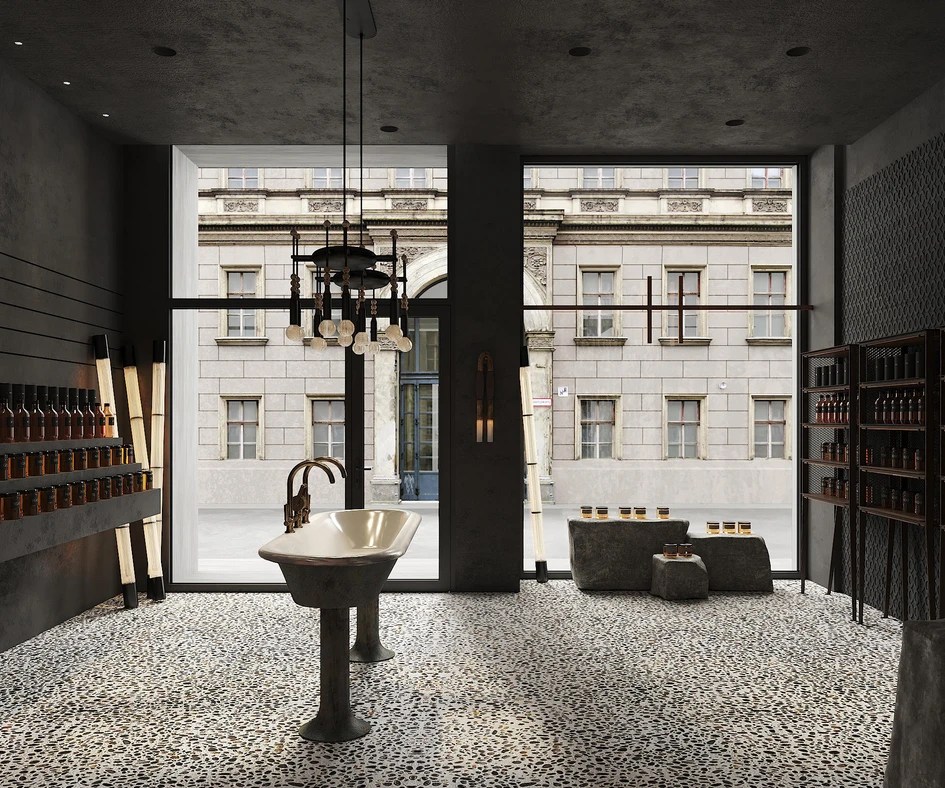
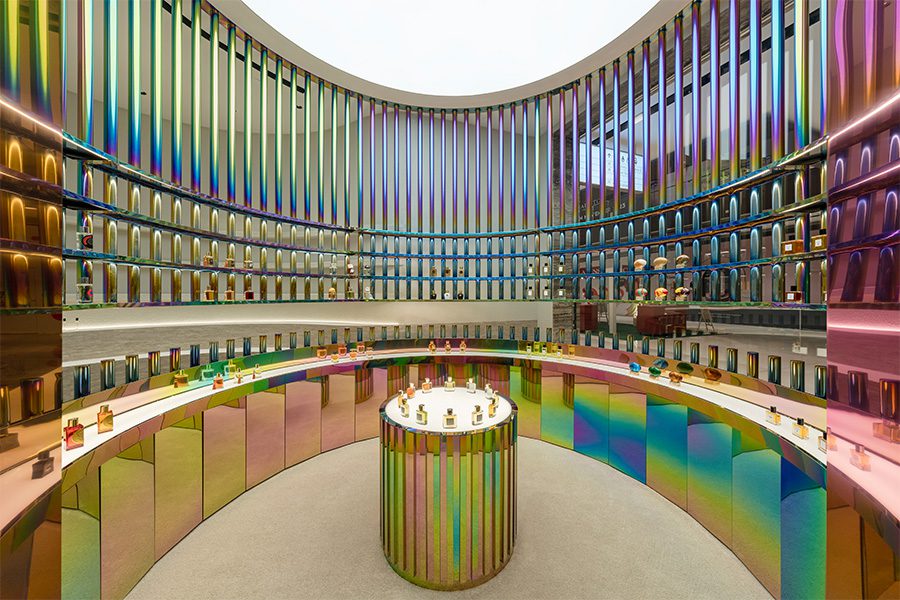
Apple turned its stores into places to experience technology. Aesop turned its stores into genuine pieces of contemporary architecture. Hermès designs every boutique as an extension of its artisanal universe. Loewe blends art, fashion and culture into spaces that look like galleries. Gentle Monster has taken experiential design to the extreme, creating art installations that draw visitors even when they have no intention of buying.
All of them have understood a very simple truth: when the product can be bought from anywhere in the world, experience becomes the real differentiator.
One of the clearest shifts in today’s retail interior design is the abandonment of cluttered spaces. For decades many stores tried to impress the customer by piling up displays, signage, decorative furniture and huge amounts of product. Abundance was mistaken for commercial appeal.
Today it’s exactly the opposite. The most advanced brands strip out everything that adds no value. Every element has a purpose, and emptiness is used as a design resource capable of raising perceived quality. This isn’t about copying minimalism because it’s trendy. It’s about letting the product breathe. A luxury store doesn’t need to prove it has a lot. It needs to prove it knows what to show and how to show it.
Empty space creates calm, directs the gaze and increases the prominence of every piece on display. It also eases circulation and reduces the customer’s visual fatigue.
Trend 2. Honest materials and authentic finishes
Another major Retail Design trend is the return to natural, honest materials.
Stone, solid wood, stainless steel, brushed aluminium, exposed concrete, microcement or mineral coatings are replacing the imitations that dominated commercial design for years. It isn’t only an aesthetic matter. Today’s consumer perceives the authenticity of materials as a reflection of the brand’s own authenticity. Wood with natural grain conveys warmth. Stone communicates permanence. Stainless steel brings precision and modernity. Linen or cotton generate closeness.
Materials speak even before the customer looks at the product. That’s why the best stores build their identity using very few finishes, but selected with enormous care.
Trend 3. Lighting stops illuminating and starts selling
There’s probably no more underrated tool in commercial design than lighting. Many companies still treat light as a purely technical matter when, in reality, it’s one of the most important elements of Visual Merchandising. Good lighting isn’t about adding more light.
It’s about directing attention. The most innovative brands work with several layers of lighting. They combine general light, ambient lighting, accents on the product and small contrasts that create depth and visual hierarchy. The customer doesn’t look at what’s best lit by chance. They do it because our brain naturally responds to contrasts of light and shadow.
Designing a store is, to a large extent, designing where the eye travels.
Trend 4. The rise of sensory design
Stores no longer appeal only to sight. More and more brands understand that a memorable shopping experience means activating several senses at once. Ambient sound, a signature scent, the texture of fixtures, the temperature of the space or even acoustics are all part of the interior design project. This isn’t about adding decorative elements with no judgment, it’s about building a coherent sensory identity.
There are hotels we recognise by their scent. Stores we identify by their music. Restaurants whose lighting is part of the dining experience. Retail is following exactly that path. Brands that manage to stimulate several senses generate much more lasting memories and build stronger emotional bonds with their customers.
Trend 5. Neuroarchitecture: designing for the brain, not just the eyes
More and more studies are showing that the physical environment directly influences our behaviour. Neuroarchitecture studies exactly that relationship between the design of spaces and how the brain works, making it possible to create stores that generate greater wellbeing, reduce stress and encourage a more pleasant shopping experience.
Although the term may sound recent, major retailers have been applying these principles intuitively for decades. Ceiling height, the width of walkways, natural light, product visibility or the removal of obstacles all influence how a customer perceives a store. When a space conveys order, balance and clarity, the visitor stays longer and explores more calmly. Conversely, an excess of stimuli, confusing circulation or aggressive lighting cause cognitive fatigue and increase the likelihood of leaving the store.
Designing a store is no longer just about making it pretty. It’s about understanding how people perceive space and using that knowledge to create more effective commercial experiences.
Trend 6. Biophilia conquers retail
The connection with nature has become one of the strongest trends in contemporary design. Biophilia starts from a simple idea: people feel better in spaces that incorporate natural elements.
In retail, this translates into the use of vegetation, natural light, organic materials, nature-inspired colours and architecture that favours a sense of calm. It isn’t about filling the store with plants. It’s about bringing nature in as part of the brand’s language. Houses like Aesop or COS use this philosophy to create settings where the customer slows down, observes more closely and enjoys an experience very different from a conventional shopping centre.
In a world dominated by screens and constant stimuli, quiet spaces have become a genuine luxury.
Trend 7. Flexible stores and constantly evolving spaces
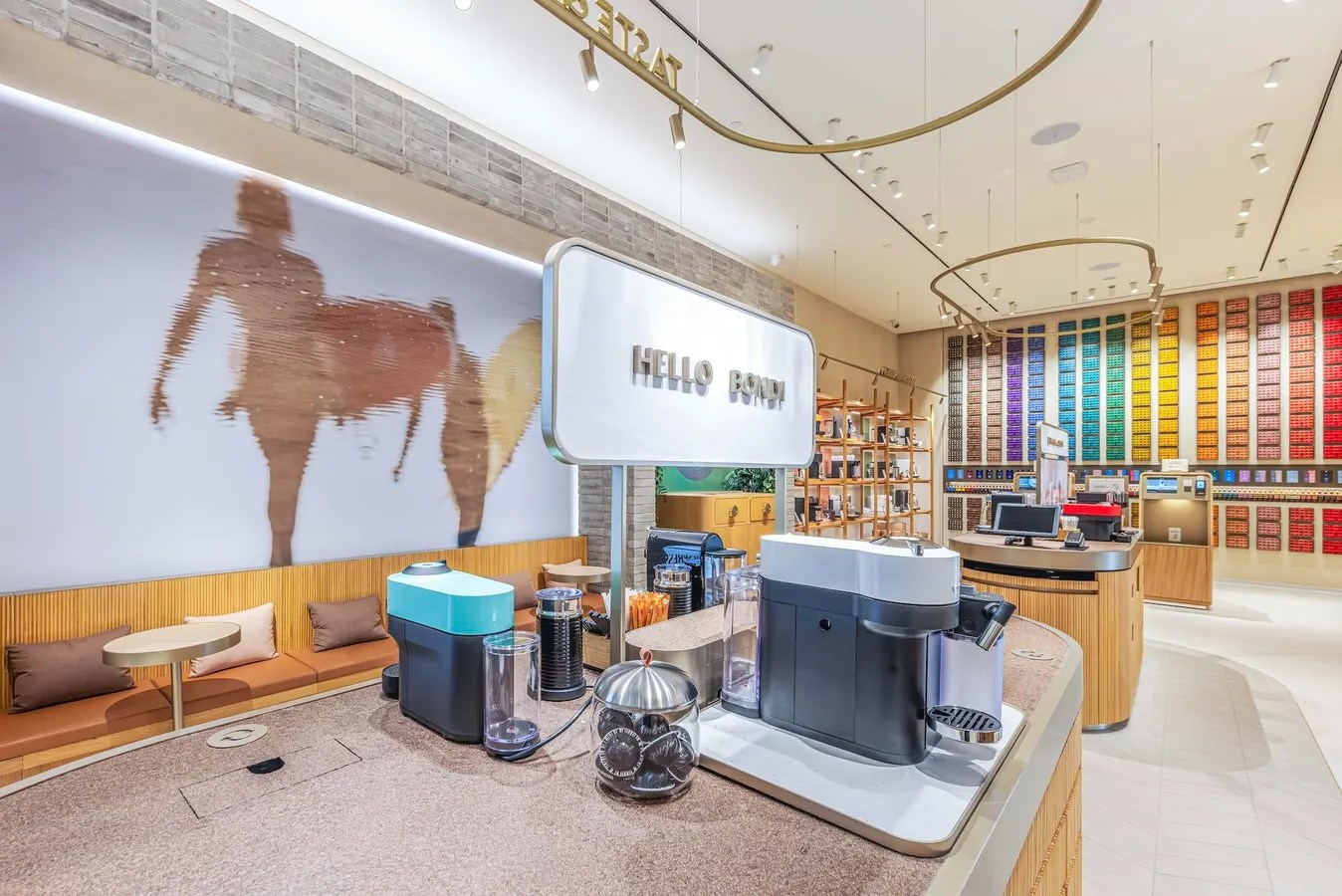
Today’s retail needs to adapt quickly. Collections change continuously, and temporary collaborations, events, launches and campaigns force stores to be reconfigured often. That’s why fixed fixtures are giving way to modular solutions. Mobile displays, configurable shelving systems, interchangeable panels or lightweight structures make it possible to completely transform a space without major investment. This flexibility doesn’t just cut costs. It also keeps the store feeling alive and creates a constant sense of novelty that invites the customer back.
A store that never changes eventually becomes invisible to whoever walks past it every day.
Trend 8. Technology integrated invisibly
A few years ago many stores added screens simply because it was a novelty. Today technology isn’t trying to grab attention; it’s trying to improve the experience.
Electronic shelf labels, smart fitting rooms, high-resolution LED screens, RFID systems, AI-based footfall analysis or personalisation tools are all part of the new retail. The difference is that the best technology is the kind you barely notice. The customer doesn’t walk into a store to admire a screen. They walk in to have a comfortable, intuitive shopping experience coherent with the brand. When technology adds value, it stays. When it’s only trying to impress, it ends up becoming just another decorative element.
Trend 9. Retail interior design must be sustainable too
Sustainability has stopped being a marketing argument and become a design criterion.
More and more brands are choosing recycled materials, low-consumption LED lighting, demountable construction systems and reusable fixtures. But sustainability isn’t only about using eco-friendly materials. It also means designing spaces able to last many years without feeling dated. Stores that need a full refurbishment every two seasons generate a huge economic and environmental impact.
Good design is design that ages gracefully.
The mistakes many stores keep making
Despite Retail Design’s huge evolution, it’s still common to find stores repeating mistakes that seriously limit their potential.
One of the most common is trying to show too much product. An excess of references visually saturates the space and makes it harder for the customer to identify what’s actually worth highlighting. Another frequent mistake is using uniform lighting that removes all visual hierarchy. If everything gets the same intensity of light, nothing manages to capture attention. It’s also common to find unintuitive layouts, excessive signage, oversized fixtures or windows that bear no relation to the store’s interior. In all these cases, the problem usually isn’t a lack of budget.
It’s the absence of an overall strategy.
The Visual Merchandiser’s role in retail interior design
There’s a false belief that retail interior design ends when the architects hand over the finished space.
In reality, that’s only the beginning. It’s the Visual Merchandiser who turns architecture into a selling tool. Their job is to decide how the product is presented, how the commercial routes are built, which zones should get the most prominence and how to keep the store feeling alive campaign after campaign. When architecture and interior design work hand in hand with Visual Merchandising, the result stops being just a beautiful space and becomes a profitable one.
That’s why both disciplines should always be understood as parts of the same project.
Conclusion
Trends change constantly. Materials evolve, new technologies appear and consumer behaviour keeps shifting. Yet one principle remains unchanged. The best stores are never the ones that follow every trend. They’re the ones that manage to clearly express a brand’s identity and create an experience the customer remembers.
Retail interior design isn’t about decorating. It’s about communicating. Every decision, from choosing a flooring to positioning a display, sends a message. And when all those messages work in the same direction, the space stops being just a store. It becomes a tool capable of moving people, standing out from the competition and generating value for the business.
At BARRONVISUAL we understand retail interior design as a strategic discipline where architecture, design, Visual Merchandising, branding and consumer behaviour are all part of the same system. Because a well-designed store isn’t just remembered.
Free resource
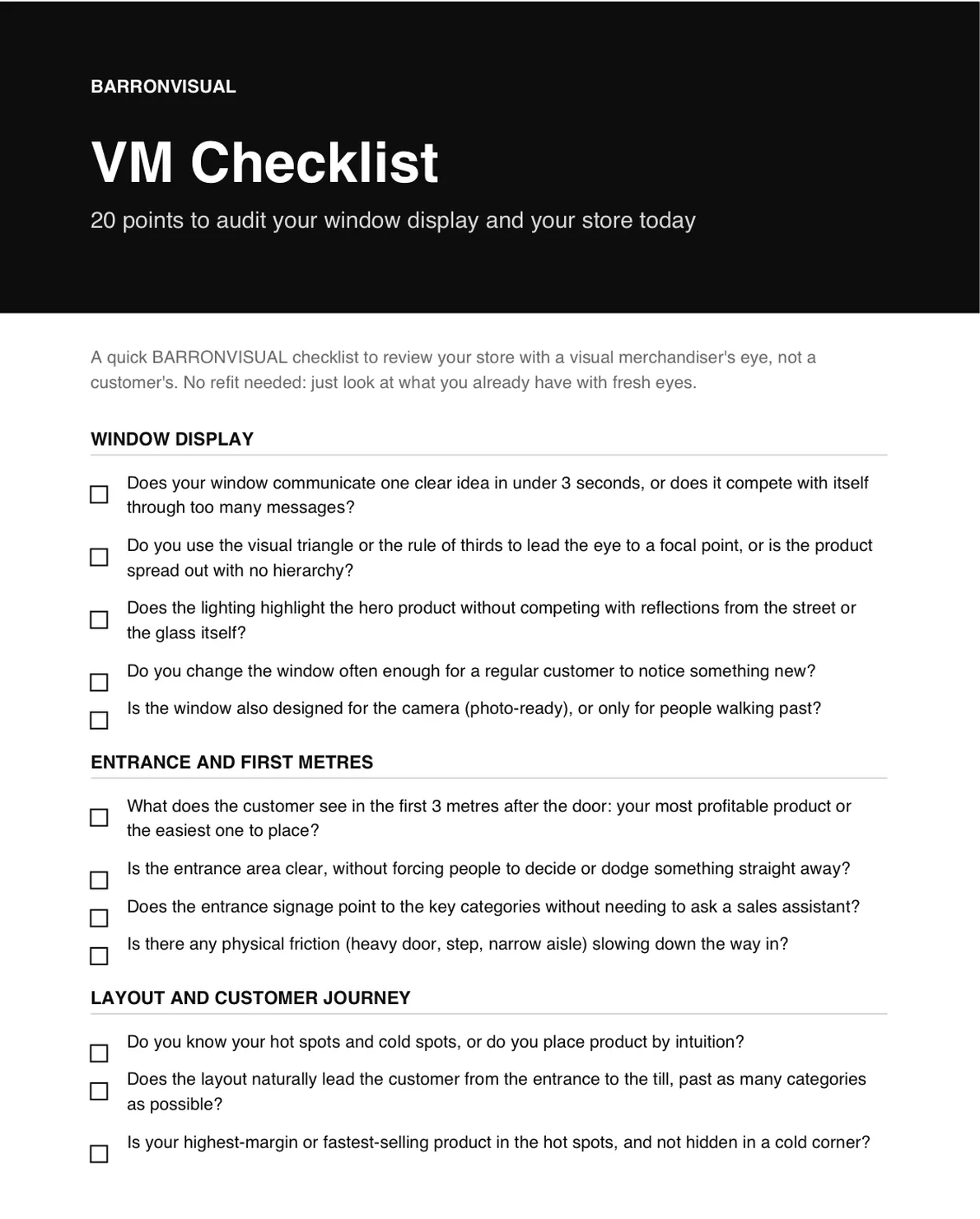
VM Checklist: 20 points to audit your storefront and your store today.
A short PDF to review your store with a visual merchandiser's eye, not a customer's. No renovation needed, just look at what you already have with fresh eyes.
I send you the PDF and, over the following days, 4 short emails to apply it. Unsubscribe in one click.