THE FUTURE OF STORES IS NOT MORE TECHNOLOGY: IT’S MORE INTELLIGENCE (human and artificial).
Juan Carlos Barrón·September 2026·Retail Design
Visual Merchandising 2027: why the storefront, the store, eCommerce, data and AI are now part of the same system
There’s something that amuses me quite a bit when I read certain articles about the future of retail.
Every year the same words appear: AI, immersive, phygital, omnichannel, personalization, experience, augmented reality…
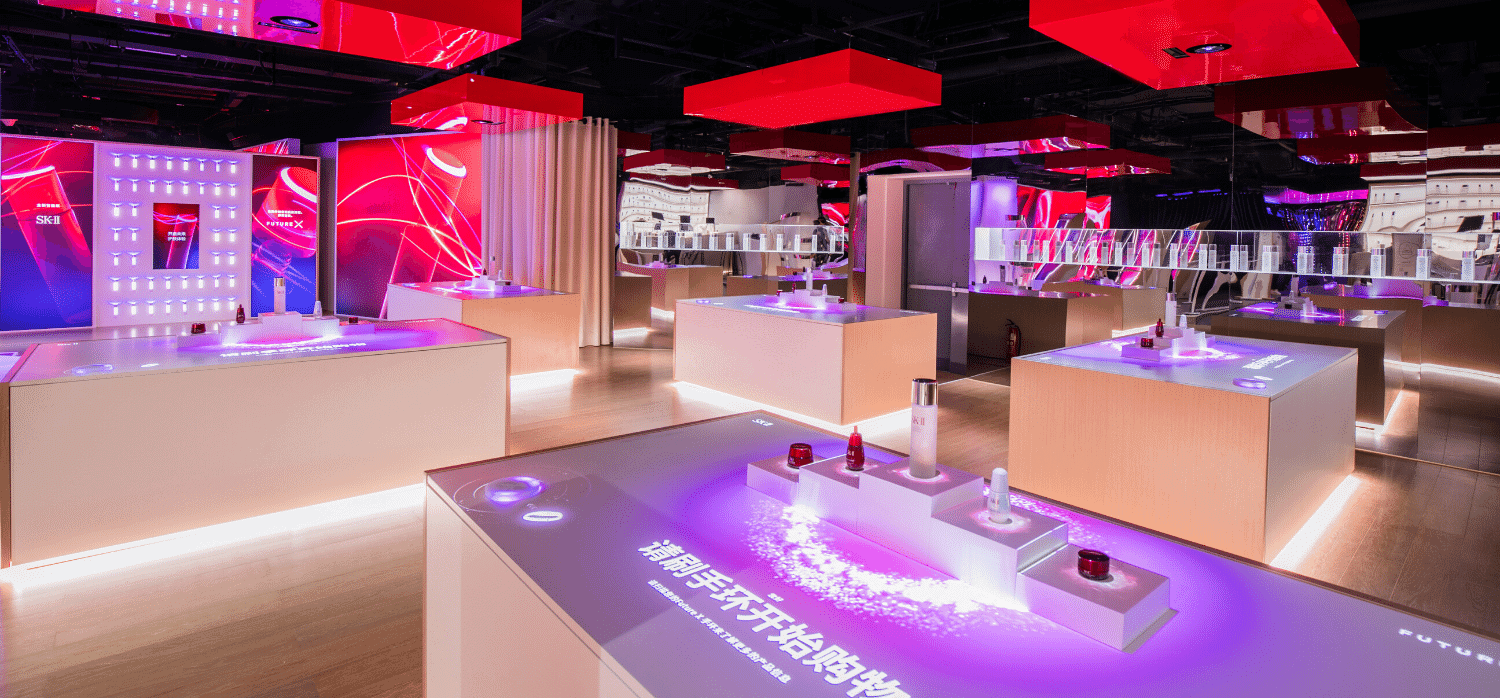
And then someone puts a huge screen in a store, adds a QR code, two neon signs and an interactive mirror, and announces that the future has arrived.
No.
That is not the future of retail.
It’s technology.
And technology and strategy are not the same thing.
I’ve spent more than 25 years working with stores, storefronts, Visual Merchandising, brands, product, commercial spaces and customer experience. I’ve seen trends come and go, digital revolutions, shifts in behavior, social media, eCommerce, smartphones, screens, RFID, augmented reality and now artificial intelligence.
And the more retail changes, the clearer one thing becomes to me:
a store doesn’t need to be more technological. It needs to be better thought out.
That is, for me, one of the great debates of the Visual Merchandising to come.
And probably also one of the least well explained.
Visual Merchandising is moving beyond the store
For a long time we understood Visual Merchandising as something fairly simple: storefront, mannequins, product, fixtures, color, lighting, displays, window displays and layout.
All of that still exists.
But the context has changed completely.
Today a person can discover a brand on TikTok, search for it on Google, ask an AI which product suits them, go to the website, look at photos, compare, check stock in a store, travel there physically, try the product, buy it from their phone and later receive it at home.
Where does the store begin?
At the storefront?
On Instagram?
On Google?
On the homepage?
In a conversation with Gemini?
On the product page?
It begins much earlier.
And it continues afterward.
That’s why I think continuing to talk about Visual Merchandising exclusively as a physical discipline is starting to fall short.
The new Visual Merchandising has to understand the complete perception of the brand.
And that includes the physical store, the storefront, the layout, the product, the content, eCommerce, UX, CRO, data and now also artificial intelligence.
The great lie of “the retail of the future”: adding technology is not innovating
I’m going to be pretty direct.
I’m seeing too many stores trying to prove they’re modern.
And that usually ends up in screens.
Screens in storefronts.
Screens on walls.
Screens in fitting rooms.
Screens to explain what’s right in front of you.
Screens to tell you what you could already have read.
And some work wonderfully.
But a screen doesn’t automatically turn a store into phygital.
A screen can simply be a screen.
True phygital retail is something else.
It’s getting the physical world and the digital world to work together to make the customer’s journey easier.
For example: a storefront that lets you continue the experience from your phone; a store that lets you check the full catalog even if it doesn’t physically carry every reference; a salesperson who can access inventory and recommend alternatives; a physical product that connects to useful digital information; an online purchase that can be returned or picked up in store without friction.
In France, immersive and phygital experience technologies are already evolving precisely toward that integration: AR, 3D, live shopping, product experiences, digital clienteling, endless aisle and tools that connect catalog, store and customer.
That does interest me.
Because the technology is solving something.
And when technology solves something, it stops being technological decoration.
The storefront is changing too
This is where I come back to my own turf.
The storefront remains one of the most powerful tools a store has.
And I don’t say that because I’m a romantic about window display.
I say it because the storefront has a brutal advantage:
it can physically interrupt the attention of someone who is walking by.
A good storefront doesn’t need the consumer to have already decided to buy.
First it has to achieve something much harder:
getting them to look.
British consultant Sarah Manning talks about a window of just 3-5 seconds to capture attention and recommends working on focal points, composition, narrative, lighting and regular renewal. She also already proposes the QR code as a bridge between the storefront and digital channels.
I agree with the first part.
But I think we can go quite a bit further.
Because the storefront of 2027 shouldn’t end at the glass.
It can continue on the phone.
It can continue on a landing page.
It can continue on Instagram.
It can continue in a video.
It can continue in a product experience.
It can continue in the store.
And it can even continue in a conversation with an AI.
That’s why I like to think of something I would call:
THE «EXPANDED STOREFRONT»
The storefront is no longer just a sheet of glass.
It can be any touchpoint capable of stopping attention, building desire and leading to the next step.
And that’s where Visual Merchandising starts to meet marketing, content, UX and CRO.
The physical store hasn’t died either. Quite the opposite
We’ve been hearing for years that eCommerce is going to put an end to stores.
It hasn’t happened.
And it seems more and more obvious to me that we’re asking the wrong question.
The question isn’t whether the consumer is going to buy online or in a store.
The question is:
what does he or she expect from the physical space that a screen cannot provide?
Touch.
Try.
Compare physically.
See the proportions.
Feel materials.
Smell.
Listen.
Talk to someone.
Discover something unexpected.
Spend some time there.
Feel a brand.
Even get a little bored.
Yes, that too.
Because a store doesn’t have to turn into a theme park.
Retail Dive recently gathered the views of executives from companies like Ulta, Stitch Fix and Tapestry, and there’s one idea I find especially important: even though AI is transforming omnichannel, emotional connection and brand experience remain fundamental for driving traffic to stores and building loyalty.
This is important.
Because we’re too often confusing experience with spectacle.
And they are not the same thing.
I don’t want more spectacular stores. I want smarter stores
A store can be spectacular and sell terribly.
It can be gorgeous.
It can appear in Dezeen.
It can be featured on Instagram.
It can receive thousands of photos.
It can win awards.
And it can have mediocre conversion.
That interests me quite a bit less.
I want to know:
What is the customer seeing?
What do they understand?
Where do they look?
What do they touch?
What product do they discover?
What creates doubt for them?
Where do they get lost?
Where do they abandon?
What do they buy?
What don’t they buy?
And, above all:
why?
That’s where true Visual Merchandising begins.
The Power Wall is no longer just a pretty wall
I’ve found it especially interesting to look at how Shopify is currently approaching classic Visual Merchandising concepts.
For example, the power wall.
Shopify still frames it as a strategic zone for stopping attention, highlighting products and steering the customer toward certain categories or items. But it introduces something that for me is fundamental in contemporary retail: connecting that physical zone with omnichannel behaviors like checking inventory, scanning codes, accessing product information or managing pickups and returns.
This is exactly what I mean when I talk about Visual Merchandising with a brain.
A wall doesn’t just have to be pretty.
It has to know what role it plays within the journey.
What product it places.
Why that product.
What margin it has.
What demand exists.
What campaign is active.
What we want to happen next.
And how that experience continues on other channels.
That is merchandising.
That is Visual Merchandising.
And that starts to be retail performance.
Avant-garde storefront with mannequins in unconventional poses and a neon-lit display case.
And yes: mannequins are still (very) important
I’ve also looked at how Shopify is approaching in 2026 something as classic as the mannequin.
And I find it interesting precisely because it shows that many apparently traditional tools still make a great deal of sense.
A mannequin can display a garment.
But it can do something much more important:
help the customer imagine themselves using the product.
Shopify is placing the focus precisely on the ability of mannequin displays to tell stories, reduce visual overload and connect the product to the consumer’s real life.
This is pure Visual Merchandising.
We don’t need to turn everything into an augmented reality experience.
Sometimes we simply need to dress a mannequin very well.
But know why we dressed it that way.
Visual summary of customer journey KPIs, productivity and the economic concepts of a store.
The real change is in the data
This is where I think Visual Merchandising has to evolve enormously.
For too long, creativity and data have been considered two different worlds.
As if one were artistic and the other corporate.
I don’t agree.
Data can help me make better creative decisions.
But you have to know which data to look at.
And here another current problem in retail appears: we have too much data.
Retail Gazette analyzed precisely in February 2026 how retailers are receiving data from web, apps, stores, loyalty, social media, retail media and other sources, but excess information can generate noise and make decision-making harder. The solution proposed by the experts consulted involves identifying a small set of metrics that are genuinely actionable.
I think this is absolutely applicable to Visual Merchandising.
I don’t need 300 KPIs.
I need to know which ones matter.
Sales.
Conversion.
Margin.
Turnover.
Space productivity.
Availability.
Average ticket.
Units per transaction.
And then link them to spatial and visual decisions.
Same KPIs. Different levers.
That’s something I’ve been advocating for years.
AI is going to change eCommerce far more than many Visual Merchandisers imagine
Here comes one of the parts that interests me most.
Google is building a commerce ecosystem in which AI no longer just answers questions.
It can help discover products, compare, interpret needs and move toward purchase through agentic commerce experiences. Google is introducing Universal Commerce Protocol tools, Universal Cart, buying functions and new metrics so brands can understand how they appear on AI surfaces.
This means something enormous.
The digital storefront is changing too.
Until now we thought:
Google → website → product page → cart.
Now we have:
person → conversation → AI → recommendation → product → commerce.
And this directly affects how we present a product.
If an AI has to recommend it, the product information has to be much better structured.
Attributes matter.
Images matter.
Descriptions matter.
Semantics matter.
Availability matters.
Contextual information matters.
Google is already introducing tools to help retailers adapt product descriptions to more conversational forms of search and to measure how brands appear on AI surfaces.
This is GEO applied to retail.
And here I think there’s still a great deal of ground to be conquered.
eCommerce needs Visual Merchandising too
This is one of the ideas I’m most interested in defending.
Because many online stores are designed as if they were simply catalogs.
And no.
An online store is a store.
It has a storefront.
It has an entrance.
It has a journey.
It has hot zones.
It has focal points.
It has adjacencies.
It has product display.
It has promotions.
It has signage.
It has a checkout.
And it has conversion problems.
The homepage can be a storefront.
The hero can be a storefront.
A category can be a shopping zone.
A related-products module can function as an adjacency.
A product page can function as a display.
The cart and the checkout are the register.
And the funnel is the journey.
Why do we keep talking about UX, CRO and Visual Merchandising as if they were completely separate worlds?
They may have different specialties.
But they’re working on the same behavior:
getting a person to find, understand, desire and buy.
And this is where my idea of Visual Merchandising 2.0 comes in
I don’t want Visual Merchandising to disappear.
I want quite the opposite.
I want it to grow.
For it to stop being locked inside the storefront.
For it to stop being considered a purely aesthetic matter.
For it to sit at the meetings where sales are discussed.
Of product.
Of eCommerce.
Of data.
Of experience.
Of brand.
Of expansion.
Of conversion.
Because the Visual Merchandiser understands something that many other disciplines don’t understand in the same way:
how to turn product into perception, and perception into action.
That has enormous value.
But careful with AI: we don’t need an army of chatbots
There’s another trend that worries me.
Now it seems like every retail problem gets solved with a chatbot.
No.
AI can be extraordinary.
But bad AI can make an experience even worse.
Retail TouchPoints recently raised an issue I consider essential: consumer adoption of AI is advancing faster than the ability of many retailers to implement it correctly, and problems arise around data quality, costs and misread metrics.
And that brings us right back to the beginning.
It’s not about using AI.
It’s about knowing what for.
An AI that helps me find the right product can be fantastic.
An AI that forces me to chat for five minutes to get information I used to find in ten seconds is crap.
As simple as that.
The store of the future will probably be less spectacular than we think
This is my personal bet.
I think we’ll see less technology used as technological decoration.
And much more technology working behind the scenes.
AI.
Data.
Inventory.
Personalization.
Clienteling.
Analytics.
Recommendations.
Automation.
Dynamic content.
But the customer may not even notice it.
And that will be a good sign.
Because when a technology is well designed, it often disappears.
The person simply thinks:
“That was easy.”
And we’ll also see something I love: the return of touch
The more digital our lives become, the more value physical things acquire.
Material.
Texture.
Scale.
Light.
Sound.
Smell.
Human presence.
Craftsmanship.
Surprise.
The store can offer things a screen can’t exactly reproduce. Above all, CULTURE.
And that’s where Visual Merchandising has an enormous opportunity.
Not to compete with digital.
But to do what digital can’t do.
Recent French research on immersive experiences points precisely to this combination: digital provides information, personalization and breadth of catalog, while the store provides physical contact, sensoriality, culture and human advice.
That is true phygital.
So, what will Visual Merchandising be in 2027?
I don’t think it will be a new discipline.
I think it will be a much broader discipline.
A professional capable of understanding:
product + space + customer + brand + data + technology + content + conversion.
Someone who can look at a storefront and think about storytelling.
But also about traffic.
Look at a layout and think about flow.
But also about productivity per square meter.
Look at a wall and think about composition.
But also about margin and demand.
Look at a homepage and recognize a storefront.
Look at a funnel and recognize a commercial journey.
Look at a product page and understand that it’s Visual Merchandising too.
And look at an AI and ask:
“Does this really improve the experience, or are we just adding AI because it’s trendy?”
That’s the kind of professional I want to be.
And the kind of professional I think retail needs.
The king of stores doesn’t want more pretty stores
After more than 25 years buried up to my eyebrows in stores, storefronts, product, Visual Merchandising, brands and retail, I can say it pretty clearly:
I’m no longer interested in making pretty stores.
I’m interested in making stores that make sense.
Stores that know who they are.
Stores that know what they want to sell.
Stores that understand who they have in front of them.
Stores that use their space well.
Stores that know how to tell a story.
Stores that connect with their website.
Stores that use data.
Stores that know how to make the most of AI.
Stores that measure.
Stores that learn.
And stores that, above all, sell without ceasing to be brands.
Because that’s the big challenge.
Not turning retail into technology.
Not turning Visual Merchandising into decoration.
Not turning experience into spectacle.
And not turning eCommerce into an endless string of “Buy” buttons either.
The future lies elsewhere.
Designing the whole system.
The storefront.
The store.
The product.
The journey.
The website.
The content.
The data.
The AI.
The experience.
The conversion.
Everything connected.
That’s what I understand by Phygital Retail Performance System.
And that, personally, is where I believe the true future of Visual Merchandising lies.
Not in making more noise.
In getting every element to do its job better.
That is the Visual Merchandising that’s coming.
And, honestly, it’s already here.
Studio
Want to apply this criteria to your store?
We design the complete space system: layout, zoning and materials, at a fixed price.