Working with your hands isn’t enough: you have to show the texture and the process
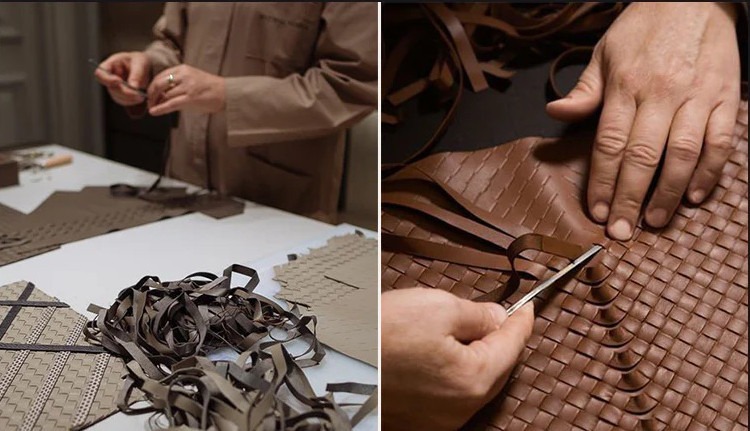
For decades, design schools taught us that the end client should only ever see the polished, finished product, packaged in a pristine mockup. Today that rule has been blown apart for good. If you don’t show the judgment involved, the search for visual references, the discarded sketches, the fabric samples or the assembly process in the workshop, the audience will default to assuming your work was spat out by an automatic generator. The visibility of the process is what grants legitimacy.
That «showing yourself at work» is the line that separates a creator or strategist from a mere command executor. Intentional imperfection, a pencil stroke that isn’t perfect, the rough texture of a piece of paper, or the decision to break a classic rule of composition because the brand’s concept demands it… all of that brings a warmth the machine will never be able to replicate. Artificial intelligence doesn’t understand cultural context, or local sensibility, or the emotion conveyed by a well-lit physical space; it only processes statistical averages of what others have already done in the past.
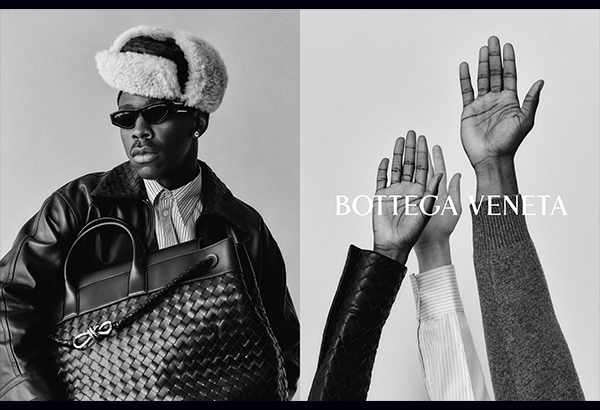
Just look at the phenomenon of absolute cult brands like Jacquemus or the avant-garde phenomenon of Miu Miu. Jacquemus doesn’t just sell bags or impeccably cut garments; it sells the scenography of its native Provence, the visual drama of its runway shows in wheat fields or salt quarries, and the theatricality of its conceptual pop-up stores that look like interactive art galleries. Miu Miu, for its part, has conquered the scepter of global fashion precisely by championing a studied imperfection, a tactile rebelliousness and an art direction that feels human, fresh and unpredictable in every show and in every one of its flagship window displays.

From digital space to the physical store: the triumph of phygital with soul
There’s another huge mistake many companies fall into: thinking that because everyone shops from their phone, physical space has lost relevance. It’s exactly the opposite. The more virtualized and flat our everyday life becomes, the more we crave physical experiences that stimulate the senses. The physical store and the conceptual window display aren’t just points of sale; they’re brand temples where visual strategy comes to life in three dimensions.
The most chic and disruptive brands of the moment are investing record sums in creating retail spaces that look more like exhibition pavilions than traditional stores. Take the tailoring and conceptual luxury house The Row, founded by the Olsen sisters. Their stores in New York or Paris are masterclasses in restraint, where iconic vintage furniture, real sculptures and a selection of noble materials create a visual silence that no e-commerce site will ever be able to emulate. Or, in the realm of ultra-luxury streetwear, the house A-Cold-Wall* or the staging of Balenciaga transform their premises into brutal industrial installations that force the visitor to stop, touch and feel the space.
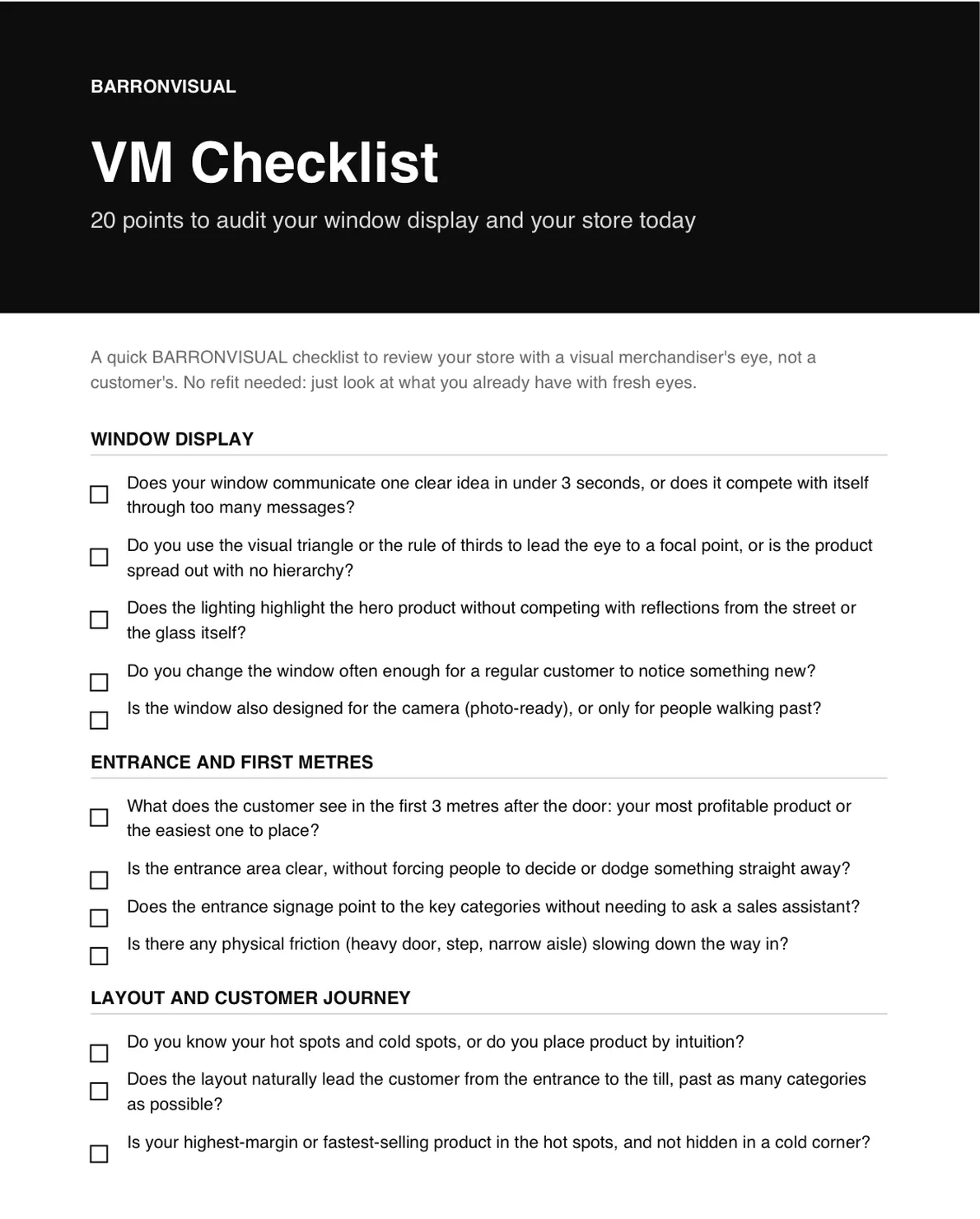
If your physical presence is boring, or your visual identity at the point of sale looks like it was pulled from a generic template, you’re giving away the most valuable opportunity you have to build a loyal community. A window display isn’t a glass frame for putting products in with a discount sign; it’s the first page of the story your brand tells to whoever is walking down the street.

A comparison table to understand where we stand
So as not to stay purely in the realm of theoretical reflection, it’s worth taking a close look at the real differences between letting yourself be swept along by the current of mass automation or betting on strategic art direction with personality and a human imprint:
| Brand Variable |
The automatic, synthetic approach |
The «Human Touch» approach at BARRONVISUAL |
| Underlying objective |
Generate quick volume, fill channels with noise and chase the easy click. |
Build brand authority, memorable presence and elevated value. |
| Identity and Language |
Aesthetic clichés derived from the prompts and algorithmic trends of the moment. |
A unique concept, its own narrative and bespoke spatial coherence. |
| Space and Window Display |
Cold renders, generic modular structures and a lack of real texture. |
Phygital design, a selection of materials with character and visual tension. |
| Relationship with the Audience |
Volatile impressions that memory forgets five seconds after you’ve scrolled past. |
Deep emotional connection, desirability and long-term loyalty. |
Mass synthetic content is good for padding things out, but nobody pays premium rates or entrusts their business’s reputation to padding. High-level conversion —the decision of a client to choose your firm over dozens of competitors— only happens when, on the other side, they see a professional team that understands culture, market nuance and the power of intentional beauty.

Technology as an accelerator, judgment as the non-negotiable seal
Don’t take this as a naive plea or an absurd rejection of innovation. At the studio we use advanced technological tools every day because they let us save time, test color schemes and get rid of some fairly tedious mechanical tasks. But we hold a conceptual red line that is never crossed under any circumstances: the machine is a hyper-fast brush, but the painter is still the human being.
If you want your project or your business to stand out in the middle of this swell of digital homogeneity, don’t try to compete on speed with a piece of software, because you’ll lose that battle. Compete on strategic depth, on visual concept and on material truth. Make the intention behind every element you put on screen or in your store’s physical space unmistakable. Defend the irreplaceable value of what has been thought through with your head, designed with sensitivity and executed with expert hands.

Shall we redefine your brand’s strategic and spatial identity?
If you feel that your business’s image has become stuck in the visual monotony of the market, or if you want to build a solid presence, with window-display expertise, high-impact branding and a character no algorithm can replicate, now is the moment to talk about your project.
At BARRONVISUAL.COM we help firms, stores and creative projects develop an art direction with its own personality, integrated with the physical environment and geared toward standing out with real authority in today’s market.
Tell us about your project and let’s design your visual strategy