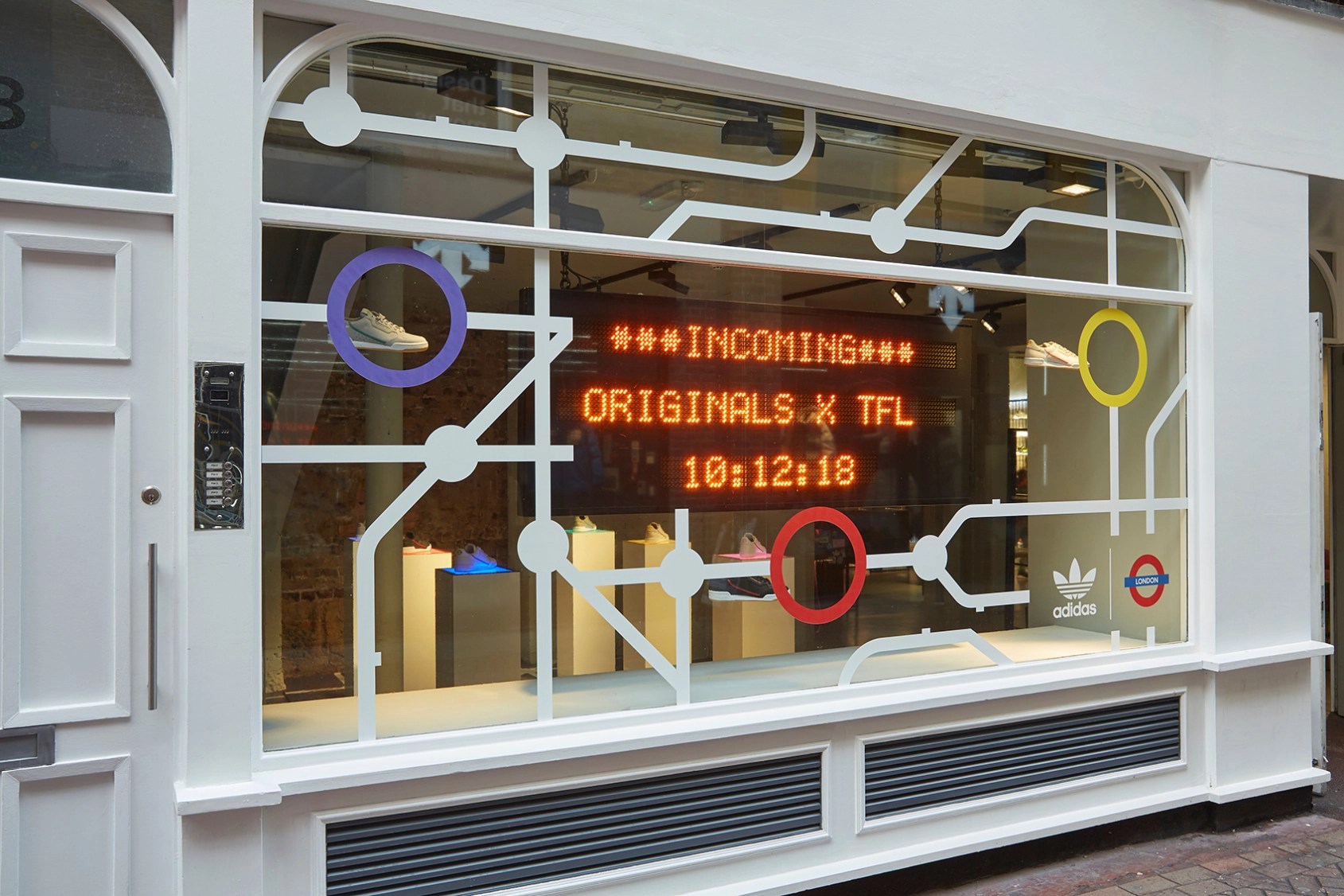
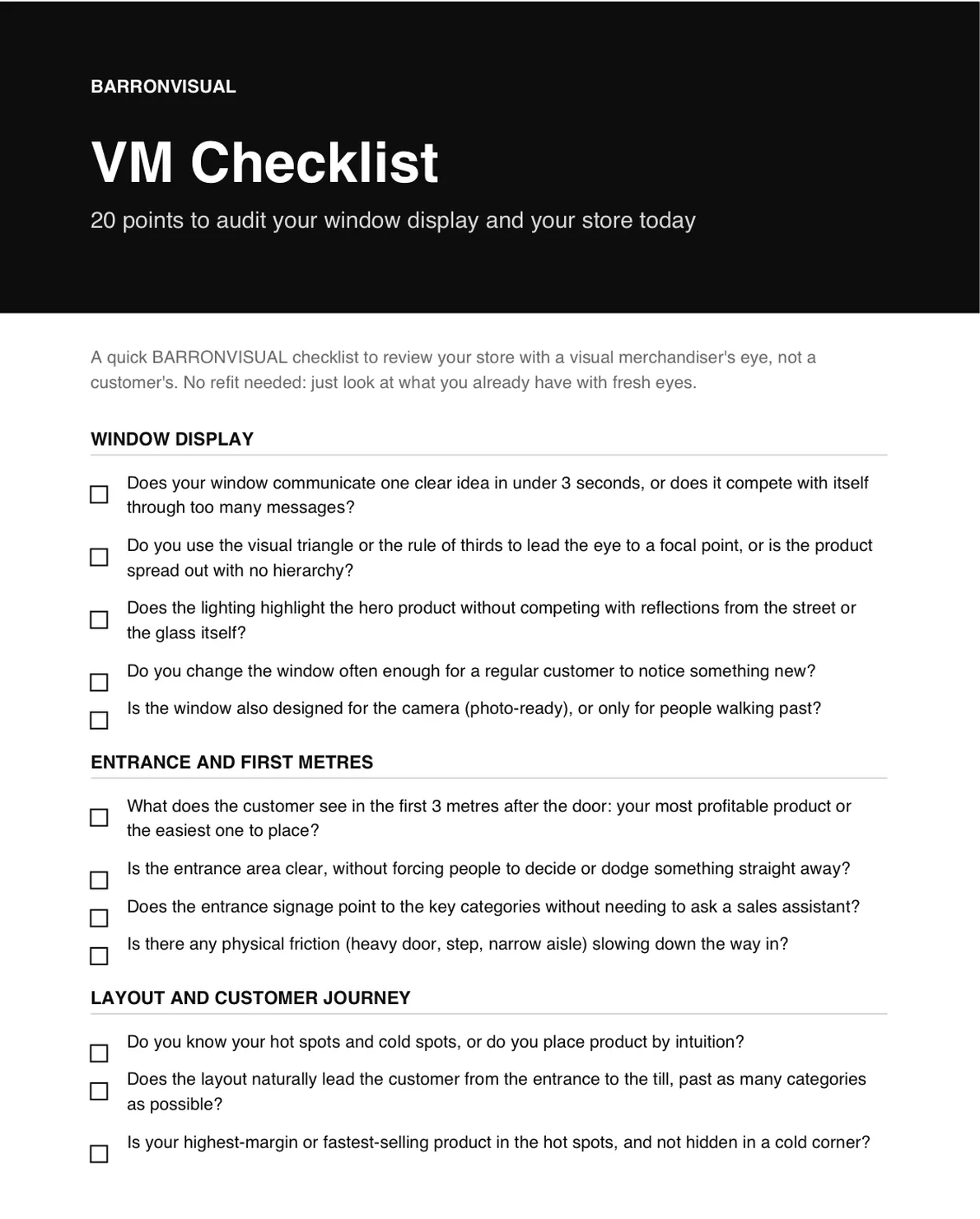
They’re not the same thing. They’re the outside attack and the inside containment.
The retail world tends to mix them up, but here, in the VM underground, we know the truth: Window Display is art and seduction. Visual Merchandising (VM) is strategy and system.
They’re not opposing concepts; they’re accomplices with radically different jobs, but one shared goal: emptying pockets.
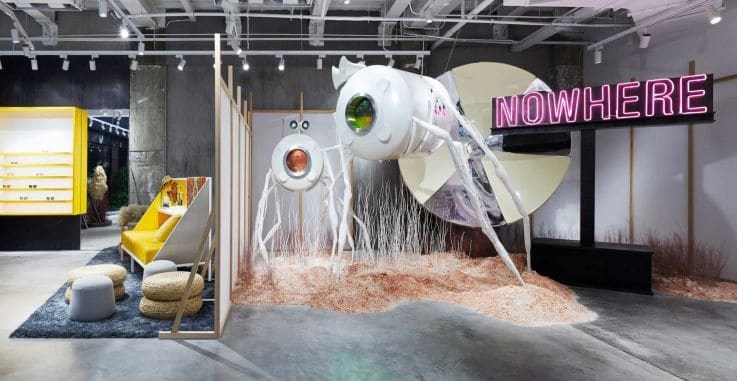
Window Display: The Dramatic Hook (Attraction)
Think of the window display as the trailer for a blockbuster movie, or a punk rock band’s flyer stapled up in an alley:
1. Single Objective: Capture
Window Display doesn’t sell the product; it sells the entrance. Its only mission is to break the pedestrian’s rhythm, spark curiosity, and trigger the action of crossing the threshold. It’s the most aggressive, artistic and ephemeral part of your strategy.
2. The Artistic Element (Seduction)
This is where unlimited creativity is allowed. It plays with contrast lighting, dramatic composition (mannequins in impossible poses, props with no apparent logic), and narrative. A good window display is a micro-theater. If your brand is underground, the window should be your visual manifesto of rebellion, forcing the passerby to ask: «What on earth is going on in there?»
3. Its Vice: Irrelevance
If it’s too artistic, the window display risks becoming pure spectacle. People look at it, photograph it… and don’t walk in. A window display artist who never thinks about the sale is just a decorator.

Visual Merchandising: The Selling Machine (Conversion)
If the window display is the trailer, VM is the full script of the movie that takes you exactly where the director wants you to go.
1. Single Objective: Retention and Spend
VM kicks in once the customer is inside. Its mission is twofold:
- Retain: Make sure the customer feels comfortable, explores, and stays longer.
- Direct: Control the journey, highlight high-margin products (at eye level), and enable impulse buys (small products near the register).
2. The Tactical Element (Engineering)
VM is a holistic concept that covers store layout, specific spot lighting, signage, cross-merchandising (grouping complementary products), and even scent and music. It’s the internal system that translates the emotion generated by the window display into an actual transaction.
3. Its Vice: Monotony
If it’s too tactical, VM risks becoming boring and predictable. Stores start to look like supermarket aisles, and the customer loses the taste for exploring.