Memorability over virality
For years the implicit goal of a pop-up was the Instagram photo. That standard has fallen short. Prada Mode, the maison’s travelling series of ephemeral spaces, builds a different structure in every city (the one in Abu Dhabi was a cylinder with live music and DJ sets) blending fashion, art and food in a single space. It isn’t after a quick photo and a fast exit, it’s after the customer staying, coming back, remembering it months later even without buying anything that day. Rhode Skin achieved the same effect at its London pop-up with a much simpler mechanism: exclusive lipstick shades that drew hours-long queues and millions of mentions. The underlying lesson is the same in both cases: the goal is no longer to be shared, it’s to be remembered.

Flash pop-ups: 24, 48 hours
The other movement rewriting the format is duration. There’s been a near-40% increase in the number of ephemeral openings over the past year, and a growing share of them literally last one or two days. It isn’t a budget constraint, it’s deliberate design: the shorter the window, the higher the real urgency to go, and the harder it is for competitors to replicate. The 48-hour pop-up isn’t a small store, it’s an event with a till.

The phygital layer inside the pop-up: prediction, not just screens
The most interesting technology layer of 2026 isn’t the flashiest one. It isn’t the screen or the augmented-reality mirror (those are still there, and still work). It’s the predictive model that decides where the next pop-up will be before visible demand exists: modular structures that go up in hours and move to follow geolocated traffic spikes, integrated with the digital campaign already running in parallel. The pop-up stops being a fixed point on a calendar and becomes a tactical response to where the customer is looking this week, with online order pickup, returns and personalisation in the same physical space.

The risk: when the ephemeral stays at posturing
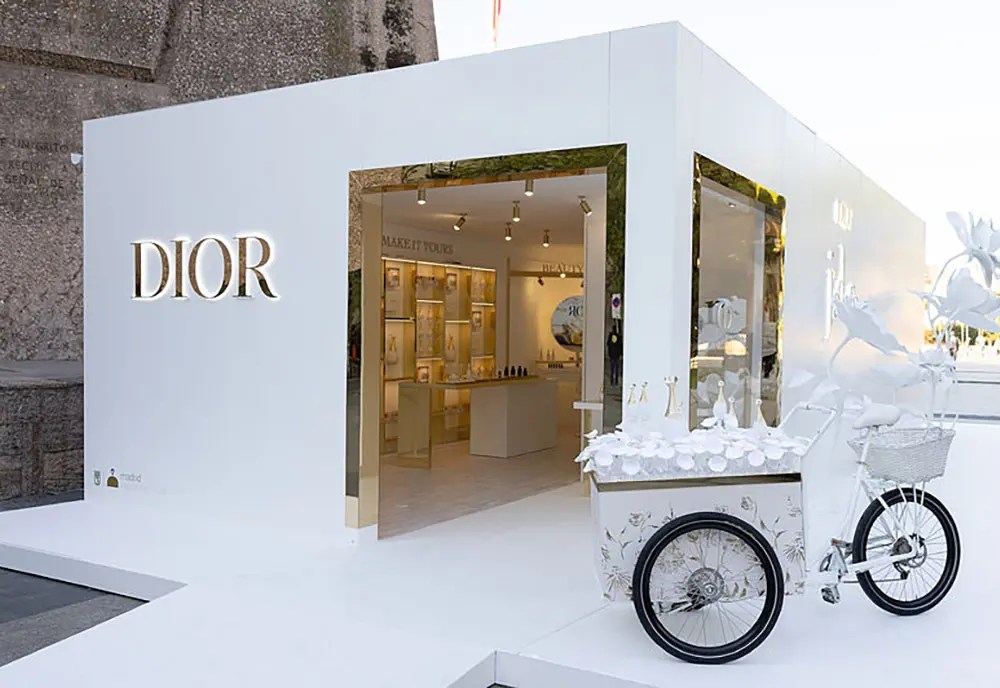
Now the less comfortable part. Most pop-ups I see (and I’ve spent 28 years looking at windows and stores, ephemeral and permanent) copy the visual language of these cases without copying the strategy behind them. A coloured cube with a hashtag isn’t a destination pop-up, it’s a set. The difference between Dior in Ibiza and a generic weekend activation isn’t the budget, it’s that the first knows exactly what brand story it’s telling and to whom, and the second only knows «we need to do something ephemeral because it’s trendy». A well-executed ephemeral format is a strategic decision with a measurable objective (sales, new customer data, market testing before opening a permanent store). A poorly executed one is an expensive photo.
How this translates for a store that isn’t a luxury maison
None of this is exclusive to brands that can rent Ibiza in August. The same judgment (single focus, clear story, a short window that generates real urgency) works for a local store that wants to test a capsule collection for a weekend, or for a brand that wants to test a new city before opening a permanent store there. The budget scale changes. The design discipline that separates a pop-up that sells from a pop-up that just decorates, doesn’t.
If you’re considering an ephemeral format for your store or your brand, at the Studio we design the full project, and in Consulting we help you decide whether a pop-up is really the tool you need right now, or whether something else is what’s actually needed.