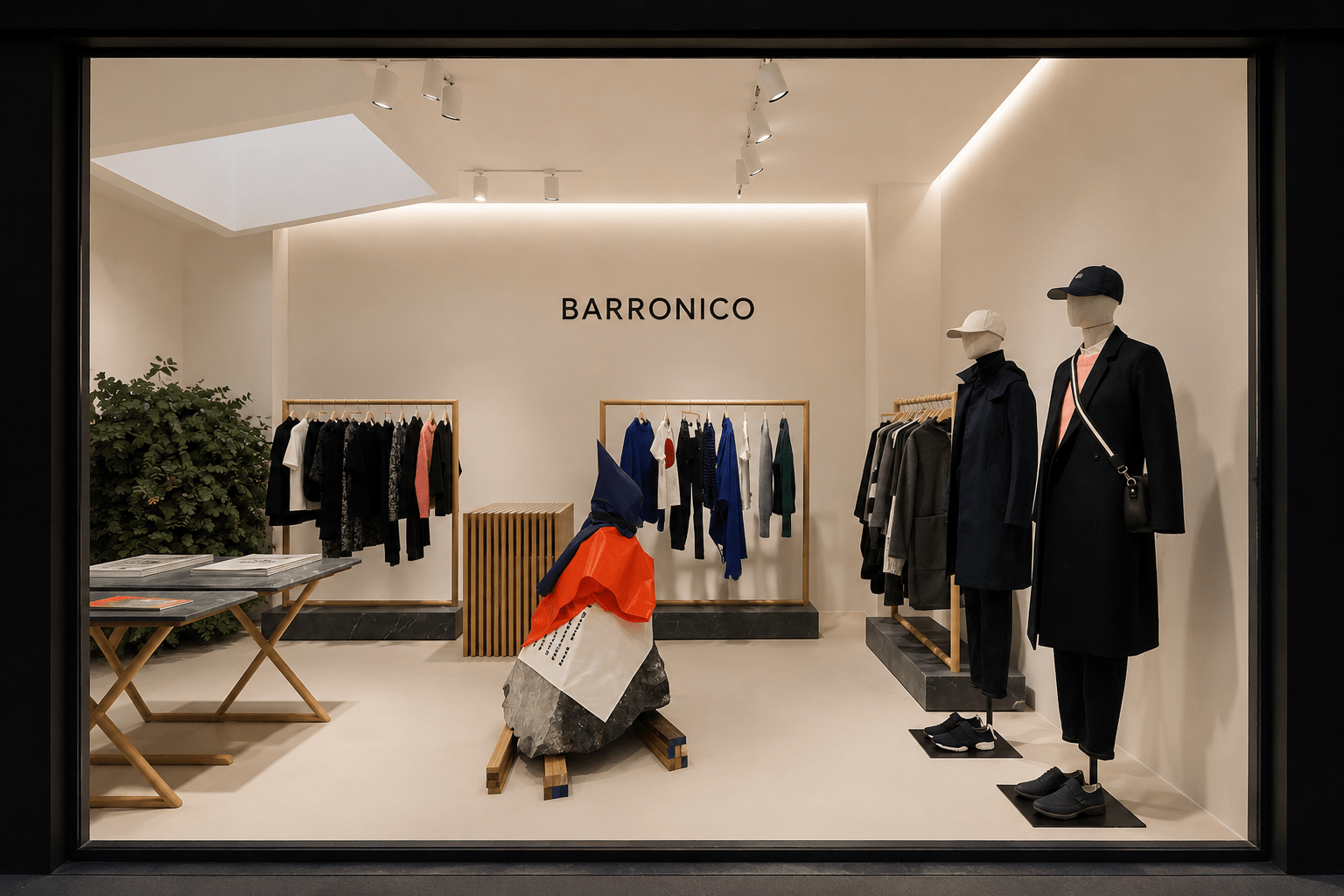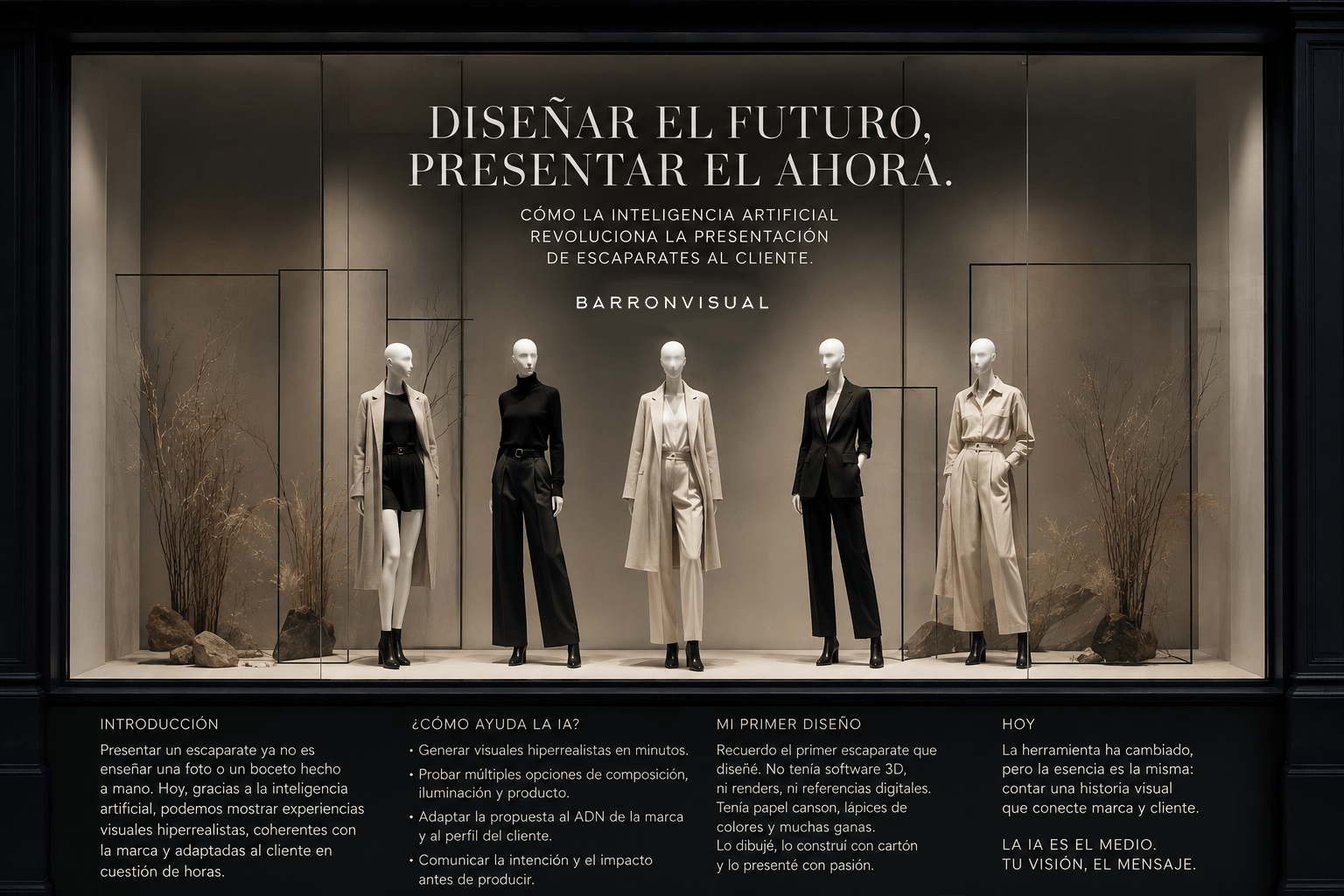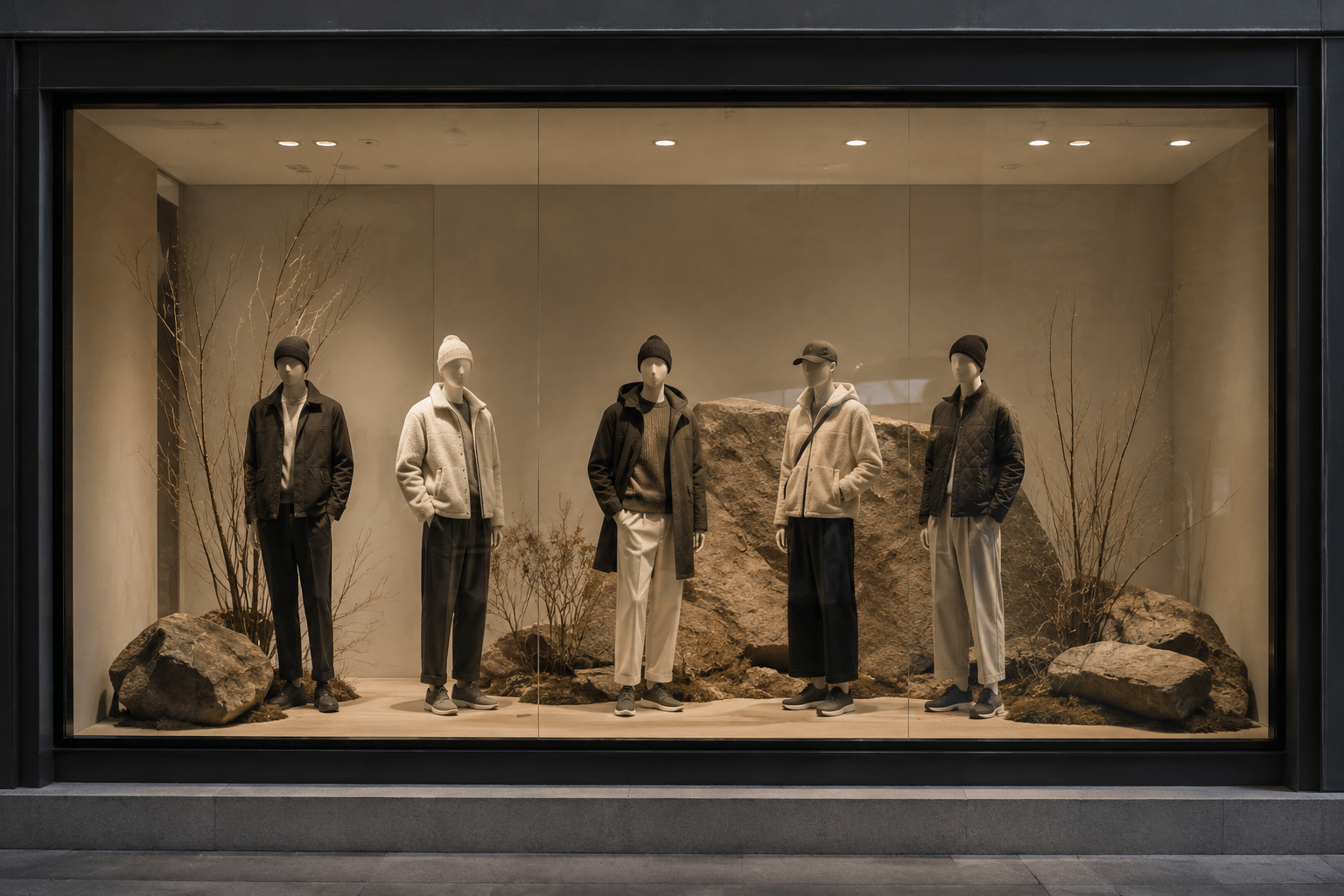
There was a time when presenting a window display concept to a client meant showing up with a hand-drawn sketch, a few material samples, and a lot of imagination. The client had to take a leap of faith. They had to picture in their head what the final result would look like. And, honestly, it wasn’t always easy.
Today that process has changed completely.
Artificial intelligence makes it possible to present hyper-realistic visual proposals in a matter of minutes, showing what a window display could look like before a single piece is built. We’re no longer just talking about renders or infographics. We’re talking about creating a much clearer conversation between designer and client, where ideas stop being abstract and become nearly real images.
AI speeds up decision-making
One of the biggest problems in any window display project has always been uncertainty.
Will it look too empty?
Will the lighting be enough?
Will that composition work with five mannequins instead of three?
What if we change the narrative completely?
Answering these questions used to mean redoing sketches, producing new renders, or even building mockups.
Now we can generate different alternatives in very little time, compare concepts, adjust materials, colors, lighting or composition, and arrive at a much stronger solution before investing a single euro in production.
AI doesn’t eliminate the creative process. It speeds it up.