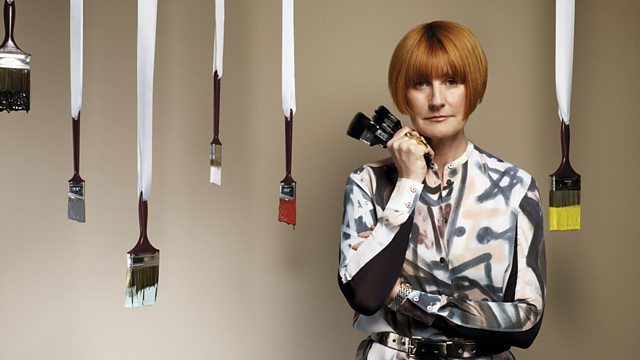
Mary Portas: The «Queen of Shops» Who Taught How to Save the High Street
Juan Carlos Barrón·September 2026·Retail Marketing
Before «phygital» was a word anyone dared say out loud, there was already a woman on British television walking into stores on the brink of closing and saying, with no anaesthetic, everything they were doing wrong. Her name is Mary Portas, known in the UK as the Queen of Shops, and she’s probably the most influential retail consultant television has ever produced. I’m not citing her out of nostalgia for daytime TV. I’m citing her because much of what she championed over a decade ago is exactly the judgment we work with today at BARRONVISUAL, and because her 2011 report to the British government remains, to my mind, the most honest diagnosis ever written of why high streets die.
Mary Queen of Shops (BBC Two, 2007-2010)
The shows that turned her into a phenomenon
Mary Queen of Shops (BBC Two, 2007-2010) was the format that made her a household name. Portas visited independent boutiques and family-run stores on the verge of closing, diagnosed without holding back (a badly conceived window, obsolete inventory, no real connection to the customer standing right in front of them) and gave them, literally, one month to turn it around: new aesthetics, renegotiating with suppliers, reopening with the full arsenal. In later seasons the format extended to bakeries, greengrocers, neighbourhood shops of every kind.
Mary Portas: Secret Shopper (Channel 4, 2011-2016) shifted the focus from the small shop to the big chains of the British high street, using mystery shoppers and hidden cameras to expose what almost no executive wants to see: that a sales decline is almost never just about price, it’s a poor service culture.
Mary Portas: Secret Shopper (Channel 4, 2011-2016)
Mary Queen of Charity Shops (BBC Two, 2010) focused on British charity shops, exposing how many operated as a dumping ground for donations rather than serious retail, and professionalised the management of a pilot Save the Children shop until its takings soared.
Mary, Queen of the High Street (Channel 4, 2013) scaled up from the individual shop to the whole high street: entire towns battered by the recession, working with communities, markets and councils to make common cause against out-of-town shopping centres.
The Portas Method, in four ideas that still hold true
A fairly consistent method can be drawn from the four shows, and it hasn’t aged badly:
The window is your cover page. It has to tell a clear, aspirational story and change frequently, not become the storeroom where whatever doesn’t fit inside piles up. It’s literally the central argument of our post on conceptual and commercial window display: a window with no focus doesn’t sell, it decorates.
Less is more with inventory. A few well-lit, well-segmented products beat crammed shelving. Portas would insist on clearing out old stock immediately, no sentimentality.
The three golden rules of service. A smile, an initial greeting, real advice without being pushy. It sounds obvious until you walk into ten stores in a row and find almost none of them do it well.
Know the real customer, not the imagined one. The most repeated mistake Portas found: shopkeepers buying stock to their own taste, not according to who actually walks through their door.
The Portas Review: when TV became public policy
Her impact was so real that in 2011 British Prime Minister David Cameron commissioned her, with public funds, to write an independent report on the future of local retail: The Portas Review: The Future of Our High Streets. The underlying premise was radical for its time and remains, to my mind, the most accurate one out there: high streets have to stop depending solely on selling and reinvent themselves as social hubs, something neither the out-of-town shopping centre nor the internet can replicate. Put another way, it’s the same idea we champion when we talk about the physical store as an advantage against Shein and Temu.
The kind of high street The Portas Review was trying to save
The report proposed 28 concrete recommendations, grouped into five areas:
1. Manage the town centre like a business. «Town Teams» with shopkeepers, landlords, residents and the council managing the high street with the same strategic vision as a private shopping centre, and more power for Business Improvement Districts (BIDs).
2. Level the playing field against big-box retail. Veto power to stop out-of-town megastores, and affordable town-centre parking: Portas argued that competing against a hypermarket with unlimited free parking, from a high street with steep parking charges, is a battle lost before it starts.
3. Cut taxes and red tape. Reform business rates so they don’t strangle small retailers, and flexibility on delivery hours.
4. Hold owners of empty units accountable. Legal tools to force investment funds, which preferred keeping units shuttered over lowering rent, to invest, sell or temporarily hand over vacant premises, and easier change-of-use processes without years of red tape.
5. Encourage entrepreneurship and markets. A national market day and fewer absurd licences so a young entrepreneur could test a product from a street stall without fighting the bureaucracy first.
What still holds up, fifteen years on
Not all of the report was successfully implemented (bureaucracy and land prices remain a real problem in the UK, and Spain isn’t much different), and that’s exactly what’s interesting: Portas’s diagnosis was more accurate than the political capacity to execute it. But the central idea, that the high street competes by being a place where something happens, not just a place where things are for sale, is truer today than in 2011, with eCommerce and generative AI eating into that ground every day.
Mary Portas, today
What we share with the Portas Method at BARRONVISUAL
When I write about visual merchandising for local retail in Spain, or when we design a Studio project for a neighbourhood shop, I’m applying essentially the same judgment Portas championed on television for nearly a decade: honest diagnosis first (that’s what our Phygital Retail Audit is for), a single focal point in the window instead of piled-up product, and knowing the area’s real customer instead of buying stock to your own taste. The scale gap between a provincial street in Castilla y León and the British high street is real, the underlying problem is exactly the same.
If anything should be clear from Mary Portas, it’s that saving a store isn’t a matter of luck or of people spontaneously coming back to the town centre. It’s design, judgment and disciplined work, exactly what we champion here. If you have a store that needs that honest diagnosis, in Contact we’ll talk about your case.
Studio
Does your window display need this same criteria?
We handle your window display's full design, fixed price, no quotes needed beforehand.