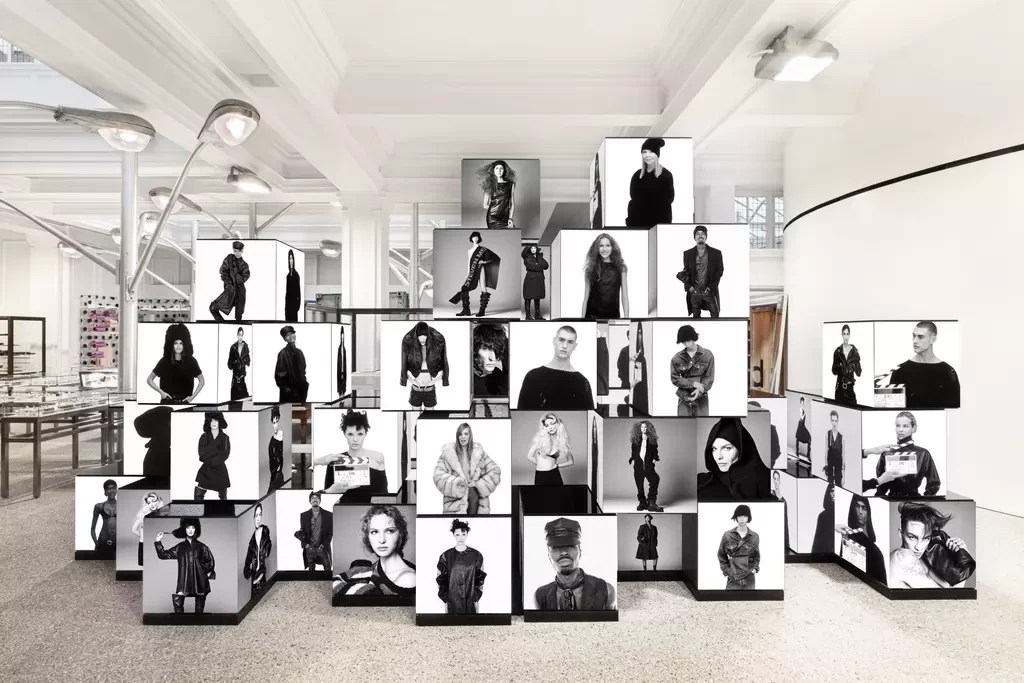
BARRONVISUAL
Blog·Phygital Merchandising

The New Window Display: From Glass to Pixel. A Zara – Inditex Case Study.

Juan Carlos Barrón·September 2026·Phygital Merchandising
window display zara ludovic barronvisual

I’m standing in front of a Zara.
I don’t go in. I just stand there looking at its facade, the way you’d look at an old friend you no longer quite recognize. Where there used to be window displays that told you a story, today there’s just a rack with garments on hangers… or photos. Perfect, glossy, calculated photos. The same kind of images that don’t really make you feel much. Sometimes not even that. Not to mention the shopping mall window displays: they’re sad. Poor and stale. Completely neglected. The provincial ones too. Right now only the flagship stores in the most iconic cities are spared. The girl broke everything. And with it, the livelihoods of a lot of people.
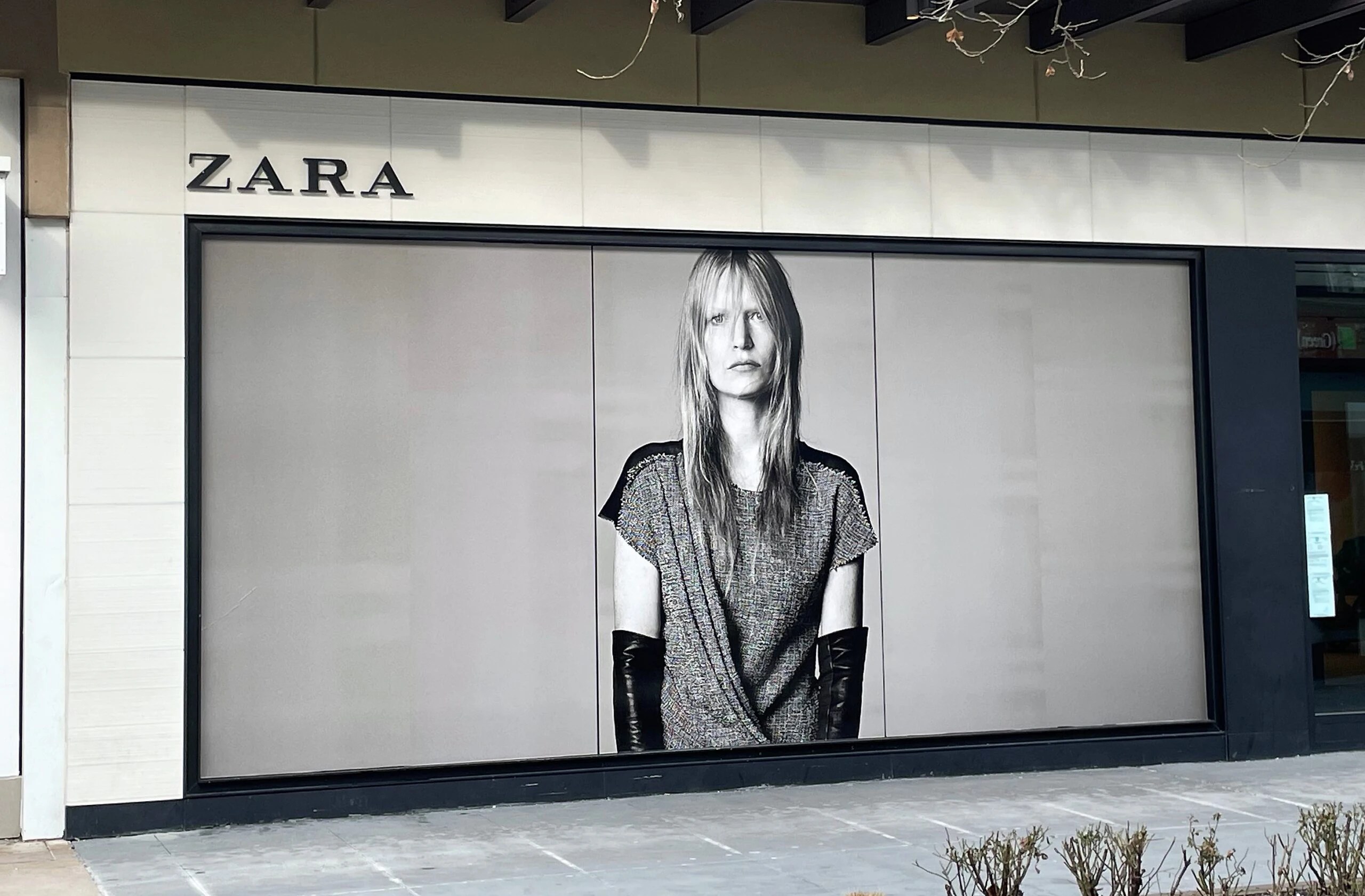
Zara storefront window with a large campaign photo instead of a staged display

And as the street carries on at its own pace, I find myself thinking:
Is trading window displays for hiring great photographers really worth it? And is that actually visual storytelling the way window display craft is?
Or are we simply wrapping retail’s silence in a layer of flawless aesthetics?

From the art of the window display to the algorithm of desire

I come from the world of classic window display, from the days when glass was a canvas and space was a narrative. Every window was a scene. Every mannequin, a character. The story was built with light, texture and emotion. The customer would walk by and, even without going in, would feel something.

Today, that magic has moved (or so we like to believe) to screens. Zara no longer tells stories in its window displays.
Now it projects them. And don’t get me wrong: the quality of its campaigns is beyond question. Working with Ludovic de Saint Sernin or with some of the most prestigious photographers in the world is, without a doubt, a smart strategy. But that was always done. There was always a seasonal lookbook, a new-collection book.

And I wonder if, in the process of digitizing emotion, we haven’t lost the human pulse of visual storytelling.

Row of Zara storefronts showing today's photo-led window treatment

When the window display was a story, not an MP4 file

There was a time when a Zara window display, yes, Zara’s! could compete with those of the great fashion houses.
There was concept. There was atmosphere. There was craftsmanship.

A window would speak of winter with steam on the glass, or of summer with an imaginary breeze moving the clothes.
It was physical storytelling: the art of making you feel something without needing to play back a video at 60fps.

Now, the facade has been colonized by the flat glow of LED screens or by photos from great photographers. And by the way, the same ones for 25 years! The same storytelling ever since.

The customer’s own reflection blends with the campaign loops by Outomuro or Steven Meisel, and the glass becomes a border between emotion and immediacy.
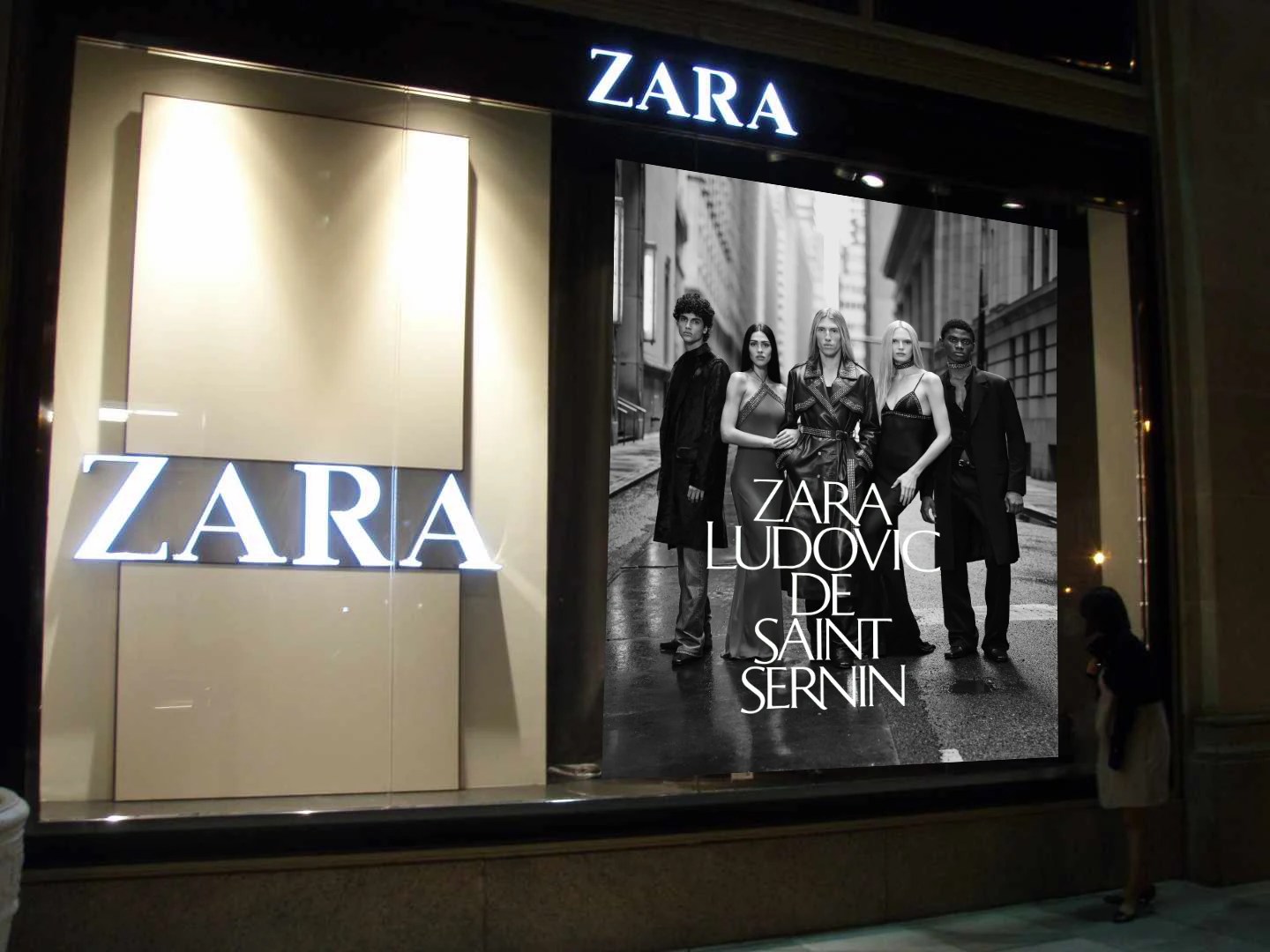

Zara window display featuring a Ludovic de Saint Sernin campaign image

If you want to master itWindow Display Killer · 149 €

Zara’s great photographers: art, marketing or real storytelling

Since Marta Ortega took over as creative director, Zara has bet on collaborating with legendary names in photography like Steven Meisel, Mario Sorrenti or David Sims. There’s no question: the campaigns are flawless, sophisticated, almost museum-worthy.
But I have to ask: is that visual storytelling, or simply luxury branding?

I admire the artistic ambition, but as a visual merchandiser, I feel a certain disconnect. The narrative in those images rarely finds continuity at the point of sale.
The photos tell a dream, but the window displays don’t develop it. The store doesn’t vibrate with the emotion the campaign promises.

And there’s the dilemma: hiring the best photographers elevates the image, yes, but authentic visual storytelling happens when that aesthetic translates into space, experience and coherence.

Without that connection between the photo, the window display and the website, it all stays a beautiful postcard, not a living story.

There’s no doubt: signature photographers bring vision, atmosphere and visual language. Zara’s campaigns with Ludovic de Saint Sernin are flawless: real bodies, aesthetic tension, sensory minimalism.

A visual statement of freedom, beauty and modernity.

But storytelling (the kind that moves you and connects with you) can’t be outsourced. It has to be built. And that’s the nuance.

Hiring a great photographer is an aesthetic decision, not a narrative one. It’s dressing the brand in someone else’s signature, even if it’s done tastefully.
Real visual storytelling happens when that image finds continuity: on the facade, in the store, on the website, in the salesperson’s gesture.

If that coherence breaks, the story dilutes, no matter how flawless the photography is.

Zara campaign image by Steven Meisel used in the window displayZara's 50th anniversary campaign by Steven Meisel

Window display craft as tactile storytelling

The physical window display is the only space where visual storytelling can be felt with all five senses.
Where the story is perceived through the body: scale, texture, reflection, the temperature of the light.

And yet, today brands seem to have given up on that urban theater. Window displays have turned into streaming screens for their own digital campaigns. Less staging, more playback. Less soul, more algorithm.

I miss that «staging» where the window dresser translated the photographer’s poetry into the language of space.
Where the render became volume, and the concept became atmosphere.

Zara website homepage featuring the same Ludovic de Saint Sernin campaign

From eCommerce to phygital: the visual storyteller’s new challenge

Phygital visual storytelling, that fusion of the physical and the digital, should be the natural evolution of window display craft.
It’s not about replacing window displays with screens, but about integrating visual narrative across every channel.

The website is now the new window display, the checkout the new ending to the story.
The Instagram feed is the hallway leading into the brand.
But if the storytelling isn’t consistent (if the tone, the atmosphere or the emotion don’t match across channels), the story breaks apart.

That’s the real challenge today: keeping the brand’s emotional coherence at every touchpoint, no matter the medium.

One of Zara's best-executed recent window displays

Zara, the mirror everyone looks into

I deeply admire Zara’s ability to reinvent itself.
Its visual muscle, its timing and its aesthetic language set the trend.
But I also feel a certain nostalgia (an elegant kind of sadness, let’s say) for having lost the scenographic soul of its old stores.

Because a screen can project beauty, yes.
But it can’t replace the emotion of a window display that breathes.

And that, deep down, is what separates visual branding from visual narrative: one shows products; the other builds worlds.

Conclusion: the lost art of moving people through space

Visual storytelling isn’t a digital discipline. It’s a visual philosophy that connects people, places and emotions through a coherent story.

A great photographer can capture a moment. A great window dresser can make that moment come alive.

Maybe it’s time to give window displays back their original role: telling three-dimensional stories. Not just photos!
Stories that aren’t downloaded, they’re felt. That aren’t projected, they’re lived.

And perhaps, just perhaps, the future of retail isn’t on screens, but in how brands learn to look at the street again.

By me:

Juan Carlos Barron, your phygital visual merchandiser and window display craftsman.

Free resource

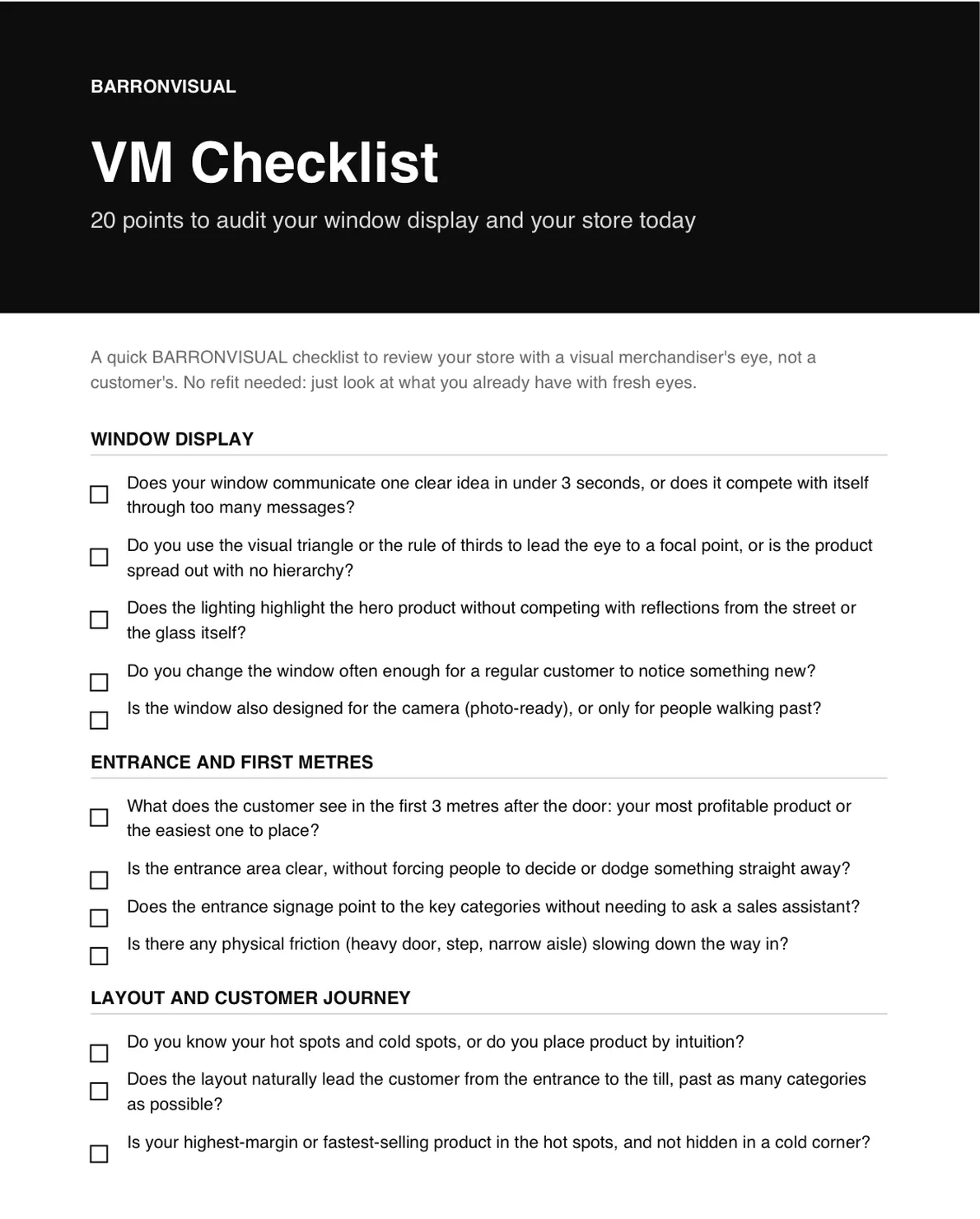
Cover of the BARRONVISUAL VM Checklist PDF

VM Checklist: 20 points to audit your storefront and your store today.

A short PDF to review your store with a visual merchandiser's eye, not a customer's. No renovation needed, just look at what you already have with fresh eyes.

Who are you?

I send you the PDF and, over the following days, 4 short emails to apply it. Unsubscribe in one click.

From Glass to Pixel: The Zara-Inditex Case | BARRONVISUAL