Chapter 1: Shein and Temu: Heralds of the Commercial Apocalypse
While Europe fakes outrage over Shein’s arrival in Paris, the real collapse is already underway. It’s not a store. It’s not a brand. It’s a model. A virus. An algorithm. And its name is Temu.
Shein: the monster we gave birth to
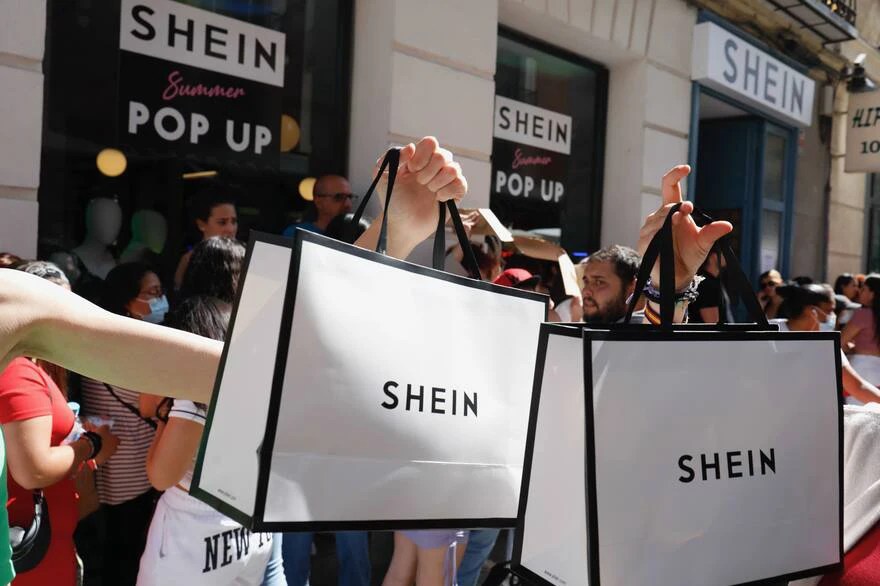
Shein opens inside BHV Marais, the heart of Parisian fashion. Surprised? Not at all. This isn’t an invasion. It’s the logical outcome of decades of European fast fashion. Zara, H&M, Primark… you’ve spent years perfecting the art of manufacturing faster, cheaper, farther away. While you were fighting over the rotten throne, Shein was taking notes. Now it’s come to teach you a lesson. And you’re going to fail.
France is scandalized. Protests, outraged politicians, alarmed NGOs. You’re only discovering trashy fashion now? After signing treaties that allowed this to happen? After buying €2.99 t-shirts on Black Friday?
Shein doesn’t sell clothes. It sells dopamine. Algorithms, micro-production, engineered desire. There are no designers. There’s data. There are no seasons. There’s an infinite scroll. And now, that machine has a storefront.
Temu: the bazaar at the end of the world
But while everyone’s watching Shein, the real apocalypse is called Temu. If Shein was selling you dopamine, Temu sells you poison wrapped in confetti. Absurdly cheap products, free shipping, spin-the-wheel games, coupons, challenges. An app designed to make you an addict. Not a consumer. An addict.
Temu belongs to Pinduoduo, the Chinese titan that turned group buying into a religion. Its model: impossible prices, invisible margins, opaque labor conditions. South Korea already found toxic substances in its products. And what did Temu do? Nothing. Because the business isn’t quality. It’s volume. It’s chaos.
Temu doesn’t sell things. It sells behavior. Every purchase is a game. Every click, a bet. Every piece of data, a currency. It doesn’t need stores. It doesn’t need window displays. It just needs you to keep swiping.