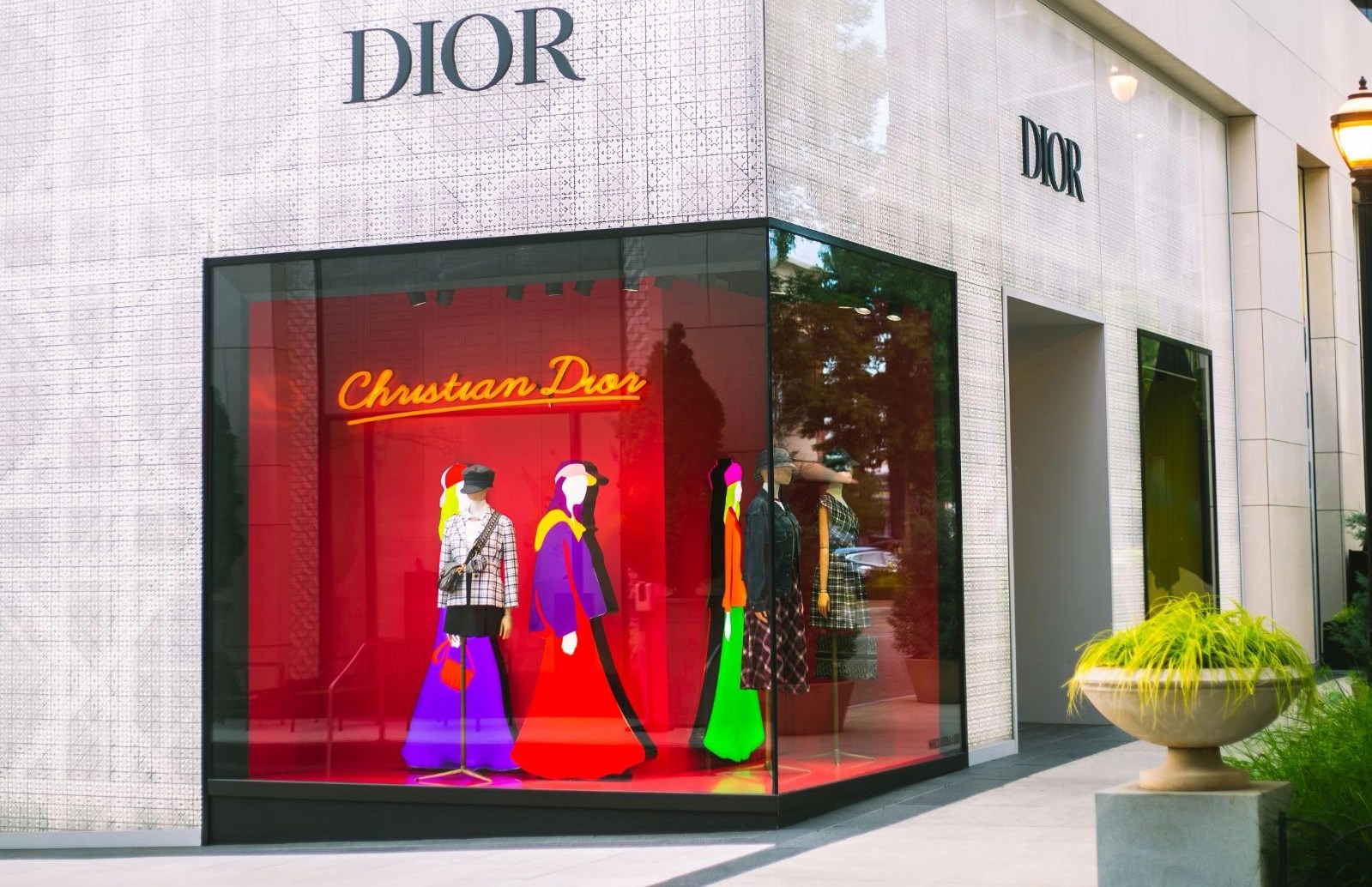
I get asked the same question almost every week, usually in the tone people use for asking the price of a luxury they don’t really need: «So, how much does a window dresser cost?» I’ll answer. But first, let me turn it around. How much is a window display that does nothing costing you? Because you’re paying for that one too. You pay for it in rent, in electricity, in metres of frontage on the best street you can afford, and in every single person who walks past without turning their head. That silent window is, by far, the most expensive thing in your store.
So let’s talk money, no detours. What window display design actually costs, why two quotes for «the same window» can look nothing alike, and what each level really includes. No invented numbers: where there’s a figure, I link the source. Where there isn’t, I explain what the price depends on.
How much does a window dresser cost? The starting figure
The most quoted benchmark in Spain, where I’m based, comes from CEAC, a vocational training school: for a freelance professional, the price per window display is around 400 euros, creative process and installation included, while periodic refreshes of a medium-sized window, until the next full install, sit at around 100 euros. It’s a useful reference. It’s also a dangerous one, because people read it as an official rate card.
It isn’t. It’s an average. And in window display, averages lie just as much as they do on the shop floor: the average of a full shelf and an empty one is a half-empty shelf, and nobody sells from that. Behind those 400 euros there might be an afternoon rearranging stock you already had, or a properly developed concept with props, reworked lighting and a plan for the window to survive six weeks instead of dying in week three.
Here’s one more figure to keep in mind. The same source puts the average salary of an employed window dresser in Spain at roughly 23,000 euros gross a year. I’ve already written about what that says about the industry. Today I care about the other side of the glass: the person who hires.

What you’re really paying for when you hire a window dresser
When retailers compare quotes, they usually compare one line: the total. Mistake. A professional window display has at least four layers, and every quote splits them differently. If you don’t separate them, you’re comparing apples with windows.
Concept: the idea that makes someone stop
It’s the invisible part and the most valuable one. Which product goes up front, what story it tells, what emotion it’s after, how it reads from across the street in three seconds. A window dresser who spends no time on concept isn’t designing you a window. They’re tidying your stock behind a pane of glass.
Production and props: what gets bought, built or rented
Plinths, structures, vinyls, paper, fabric, flowers, mannequins, fixtures. This is where prices vary most, and that makes sense: a paper backdrop and a custom-built structure are not the same bill. Always ask whether props are included or extra, and whether they’re reusable. A good professional designs pieces that work again next season.
Installation, lighting and timing
Installation hours, travel and, very often, working outside opening hours, because nobody wants a half-built window at noon on a Saturday. Lighting deserves its own chapter: a beautiful window with badly aimed spots is a window switched off. If the quote doesn’t mention lighting, ask.
Continuity: maintenance, photography and a guide to roll it out
A window doesn’t end on install day. Product needs refreshing, sold items need replacing and, if you have more than one store, the whole thing needs documenting so it’s replicated identically everywhere. That documentation, with photos and measurements, is what turns a window into a system.